Replacing a drop-in sink with a farmhouse sink can dramatically change the look of your kitchen, but it is not always a simple one-for-one swap. A drop-in sink sits on top of the countertop, while a farmhouse sink exposes the front apron and typically requires planning for the cabinet, countertop, and support.
The good news is that if you choose the right sink style, especially a retrofit farmhouse sink, the upgrade can be much cleaner than a full remodel. The key is knowing whether your existing cabinet, countertop, plumbing, and sink opening can support the change before you order.
This guide explains when replacing a drop-in sink with a farmhouse sink makes sense, when it does not, and what to consider if you need a cleaner alternative, such as a modern drop-in sink, undermount sink, or workstation sink.
Quick Navigation
- Can You Replace a Drop-In Sink with a Farmhouse Sink?
- Drop-In vs Farmhouse Sink: Why This Is Not a Simple Swap
- Option 1: Retrofit Farmhouse Sink
- Option 2: Full Farmhouse Sink Conversion
- Will Your Existing Cabinet Work?
- Can You Keep Your Existing Countertop?
- Best Materials for a Farmhouse Sink Retrofit
- Common Mistakes to Avoid
- Best Alternatives If a Farmhouse Sink Will Not Work
- Which Sink Should You Choose?
- Installation Overview
- Need Help Before Ordering?
- Frequently Asked Questions
Can You Replace a Drop-In Sink with a Farmhouse Sink?
Yes, you can replace a drop-in sink with a farmhouse sink, but only if the new sink works with your cabinet width, countertop opening, apron height, plumbing layout, and support requirements.
The easiest path is usually a retrofit apron-front farmhouse sink. These sinks are designed to give you the farmhouse look with less cabinet modification than a traditional undermount farmhouse sink.
A traditional farmhouse sink can also be installed, but it often requires more work, including cabinet face modification, countertop changes, sink support framing, and plumbing adjustments.
Simple rule of thumb
- Choose a retrofit farmhouse sink if you want the apron-front look with fewer changes.
- Choose a traditional farmhouse sink if you are doing a larger remodel or replacing countertops.
- Choose another sink style if your cabinet, countertop, or budget cannot support the conversion.

Before ordering, review our Farmhouse Sink Cabinet Size Guide to understand cabinet fit and interior width requirements.
Drop-In vs Farmhouse Sink: Why This Is Not a Simple Swap
A drop-in sink is designed to sit on top of the countertop. Its rim rests on the counter surface, and the sink drops into a cutout from above. This makes drop-in sinks one of the easiest replacement styles.
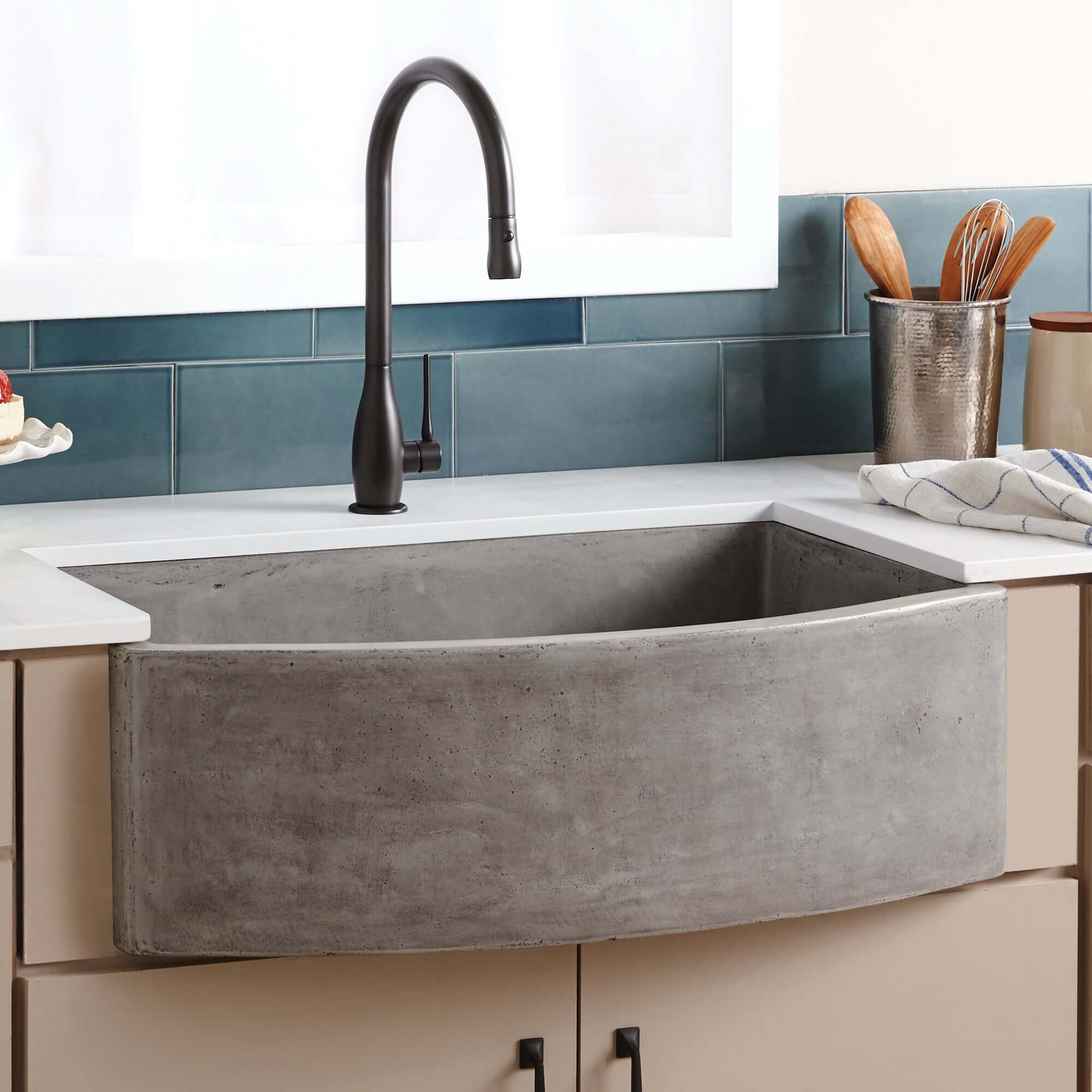
A farmhouse sink, also known as an apron-front sink, is distinct. The front of the sink is exposed, which means the cabinet face usually needs to be cut or designed to accommodate the apron. Many farmhouse sinks also require added structural support because fireclay, stone, cast iron, and some composite sinks can be significantly heavier than standard drop-in sinks.
That is why the question is not simply, “Will the sink fit the hole?” The better question is:
Will my cabinet, countertop, and plumbing support the type of farmhouse sink I want?
If you are still comparing farmhouse styles, start with our full farmhouse sink collection.
Option 1: Retrofit Farmhouse Sink
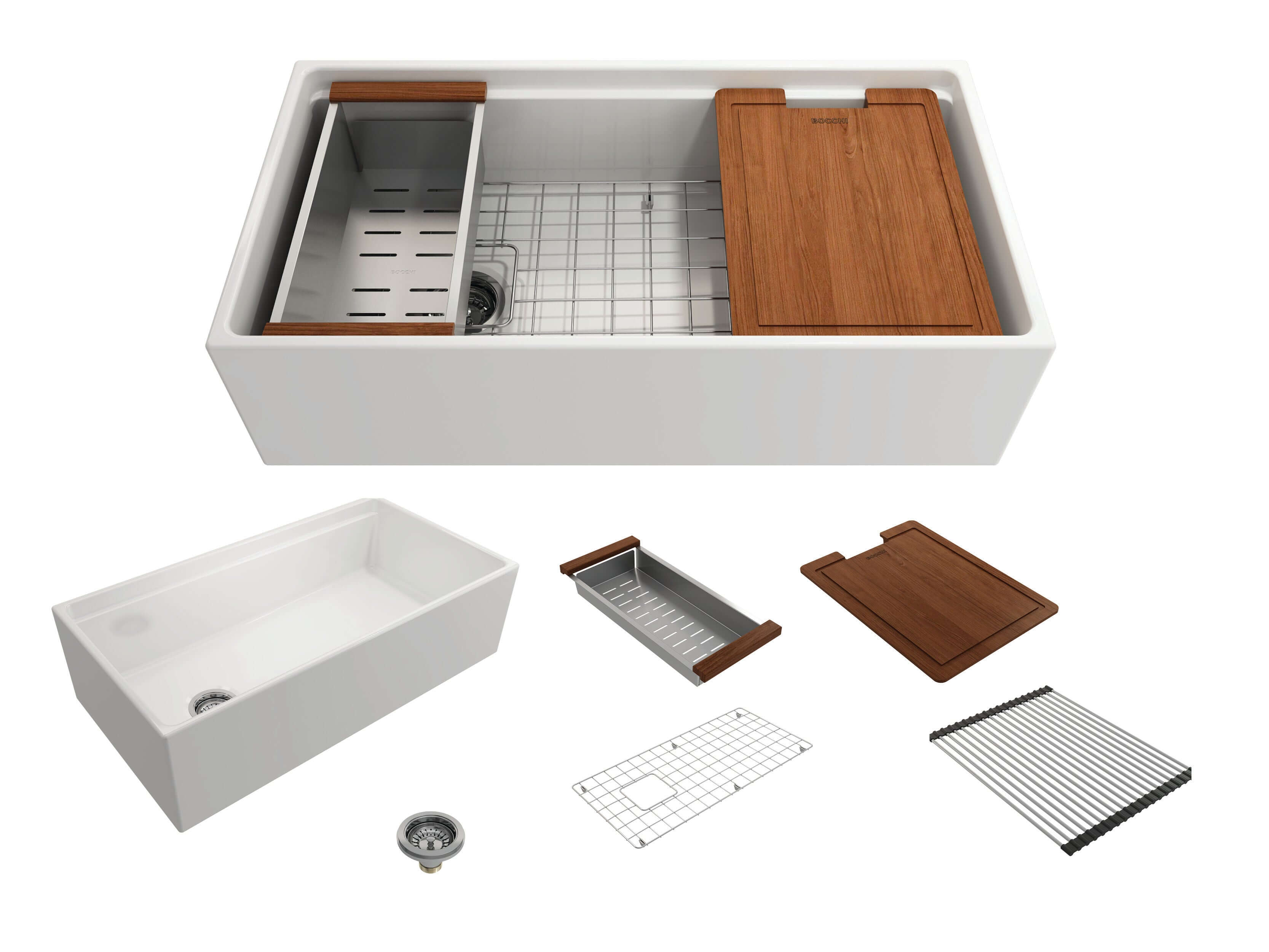
A retrofit farmhouse sink is usually the cleanest option when replacing a drop-in sink. These sinks are designed for kitchen upgrades where the homeowner wants an apron-front look without rebuilding the entire sink base.
Many retrofit farmhouse sinks feature a shorter apron, a modified installation profile, or design elements that facilitate their integration into standard cabinets. They may still require cabinet cuts and support work, but the installation is usually more practical than forcing a traditional farmhouse sink into an existing drop-in setup.
Best for
- Homeowners keeping existing cabinets
- Kitchen refreshes instead of full remodels
- Replacing a standard drop-in sink with a more elevated look
- Projects where minimizing cabinet modification matters
Still check before ordering
- Minimum cabinet size
- Apron height
- Existing countertop cutout
- Sink depth and plumbing clearance
- Whether the sink is top-mount, undermount, or dual-mountStart here if you want the easiest farmhouse-style upgrade: Shop Retrofit Farmhouse Sinks.
Option 2: Full Farmhouse Sink Conversion
A full farmhouse sink conversion is a bigger project. This is what happens when you remove the drop-in sink and install a traditional apron-front sink that was not specifically designed as a retrofit model.
This can absolutely be done, especially during a larger kitchen remodel, but it usually requires more coordination.
A full conversion may require
- Removing the old drop-in sink
- Cutting or modifying the cabinet front
- Building structural support inside the cabinet
- Modifying or replacing the countertop
- Reworking drain, faucet, or garbage disposal connections
- Test-fitting the sink before final cuts are made
This path is most appropriate when you are already replacing countertops, rebuilding the sink cabinet, or working with a contractor and fabricator. For detailed installation planning, read our Farmhouse Sink Installation Guide.
Will Your Existing Cabinet Work?
Your existing cabinet is the first major checkpoint. A farmhouse sink needs more than width. It needs enough interior space, front apron clearance, and structural support.
The most common mistake is assuming the cabinet’s outside width tells the full story. A 36-inch cabinet does not always provide 36 inches of usable space inside. Face frames, side panels, support rails, and drawer fronts can all reduce the usable opening.
Check these cabinet details
- Exterior cabinet width
- Interior cabinet width
- Face frame thickness
- False drawer front height
- Sink apron height
- Available depth for plumbing and disposal
- Ability to add support rails or a support platform

If the cabinet is too narrow or structurally weak, the sink may technically fit but still be a poor installation choice.
Use our farmhouse sink cabinet size guide before choosing a sink size.
Sizing note: Do you have a sink in mind? Look up its SKU in Kitchen Sink Fit Check to view the manufacturer's installation specifications and standard cabinet size.
Can You Keep Your Existing Countertop?
Sometimes yes, sometimes no. This is one of the biggest deciding factors when replacing a drop-in sink with a farmhouse sink.
A drop-in sink usually leaves a finished countertop opening that was cut for that specific sink shape. A farmhouse sink may need a different front cutout, a different reveal, and a different support structure. Whether your countertop can be reused depends on the material, cutout, sink design, and installer's skill.
Laminate countertops
Laminate is usually easier to cut than stone, but it can chip, swell, or expose unfinished edges if not handled carefully. A retrofit farmhouse sink may be possible, but the final look depends heavily on the existing cutout and the installer's precision.
Butcher block countertops
Butcher block is more modifiable than stone or quartz. It can be a good candidate for a farmhouse retrofit, but all exposed cuts must be sealed properly to prevent water damage.
Quartz, granite, and stone countertops
Stone and quartz are the most difficult to modify after installation. Cutting an existing stone countertop in place is specialized work and may not be recommended in many situations. If your countertop cutout does not work with the new sink, replacing the countertop may be cleaner and safer.
Stainless steel or metal countertops
These are less common in residential kitchens and require specialized fabrication. Do not assume they can be easily modified for an apron-front sink.
If keeping your existing countertop is the top priority, a drop-in farmhouse sink or retrofit-friendly model may be the better direction.

Best Materials for a Farmhouse Sink Retrofit
The sink material affects weight, installation difficulty, cabinet support, and long-term maintenance. The right material depends on whether you are doing a light refresh or a full conversion.
Fireclay farmhouse sinks
Fireclay is one of the most popular farmhouse sink materials because of its classic white finish and timeless apron-front look. However, fireclay sinks are heavy and can have slight dimensional variations. They should be test-fitted before final cabinet cuts are made.
Best for: timeless farmhouse style, traditional kitchens, and planned remodels where support can be built correctly.
Stainless steel farmhouse sinks
Stainless steel is often more forgiving than fireclay or stone. It is generally lighter, available in many retrofit-friendly configurations, and works well in modern, transitional, and professional-style kitchens.
Best for: easier retrofits, practical kitchens, and homeowners who want durability with less installation risk.
Copper farmhouse sinks
Copper farmhouse sinks offer a warm, handcrafted look. They may be lighter than fireclay or stone, but handmade copper sinks can have unique dimensional and finish characteristics. Confirm the spec sheet carefully.
Best for: rustic, traditional, Spanish, Mediterranean, and character-rich kitchens.
Granite and composite farmhouse sinks
Granite composite sinks can be durable and modern, but they require careful sizing and support planning. They are often heavier than stainless steel and less forgiving than lightweight drop-in models.
Best for: modern kitchens, matte finishes, and buyers who want durability with a clean design.
Natural stone farmhouse sinks
Natural stone sinks can be beautiful, but they are usually the least forgiving retrofit option. They are heavy, may require substantial support, and often make more sense in a planned remodel than a simple drop-in replacement.
Best for: custom kitchens and remodels with professional cabinet and countertop planning.
Common Mistakes to Avoid
Most failed farmhouse retrofits happen before installation begins. The problem is usually not the sink itself; it is the assumption that any farmhouse sink can replace any drop-in sink.
Mistake 1: Assuming all farmhouse sinks are retrofit-friendly
They are not. Some farmhouse sinks are made for full cabinet and countertop planning. Others are designed for easier retrofit use. Start with the right product category: retrofit apron-front farmhouse sinks.
Mistake 2: Measuring only the old sink opening
The old countertop cutout matters, but it is not enough. You also need the cabinet interior width, apron clearance, sink depth, and support plan.
Mistake 3: Ignoring the apron height
The apron is what creates the farmhouse look, but it is also what requires cabinet modification. If the apron is too tall for your cabinet front, the installation may become more invasive.
Mistake 4: Forgetting structural support
Farmhouse sinks should not simply hang from the countertop. Heavy sinks need proper cabinet support, especially fireclay, stone, cast iron, and some composite models.
Mistake 5: Not involving the right trades
A plumber may handle drain and faucet connections, but a carpenter or cabinet installer may be needed for cabinet cuts. A countertop fabricator may be needed for stone or quartz changes.
Mistake 6: Buying before asking for a fit check
This is the easiest mistake to avoid. Before ordering, measure your cabinet, take photos, review the spec sheet, and contact support if you are unsure.
Best Alternatives If a Farmhouse Sink Will Not Work
This is important: if a farmhouse sink is not a smart fit for your existing kitchen, that does not mean you are stuck with your old sink style. There are cleaner replacement options that may give you a major upgrade with less cabinet and countertop risk.
Option A: Modern drop-in kitchen sink
If you want the easiest replacement path, a new drop-in kitchen sink is usually the most practical option. It uses the same general installation concept as your existing sink: the sink rim sits on top of the countertop.
Best for: homeowners who want a clean upgrade without major cabinet or countertop changes.
Option B: Drop-in farmhouse sink
A drop-in farmhouse sink may be a useful middle ground. It can offer farmhouse styling while avoiding some of the complexity of a traditional undermount apron-front installation.
Best for: buyers who want farmhouse character but need a more installation-friendly approach.
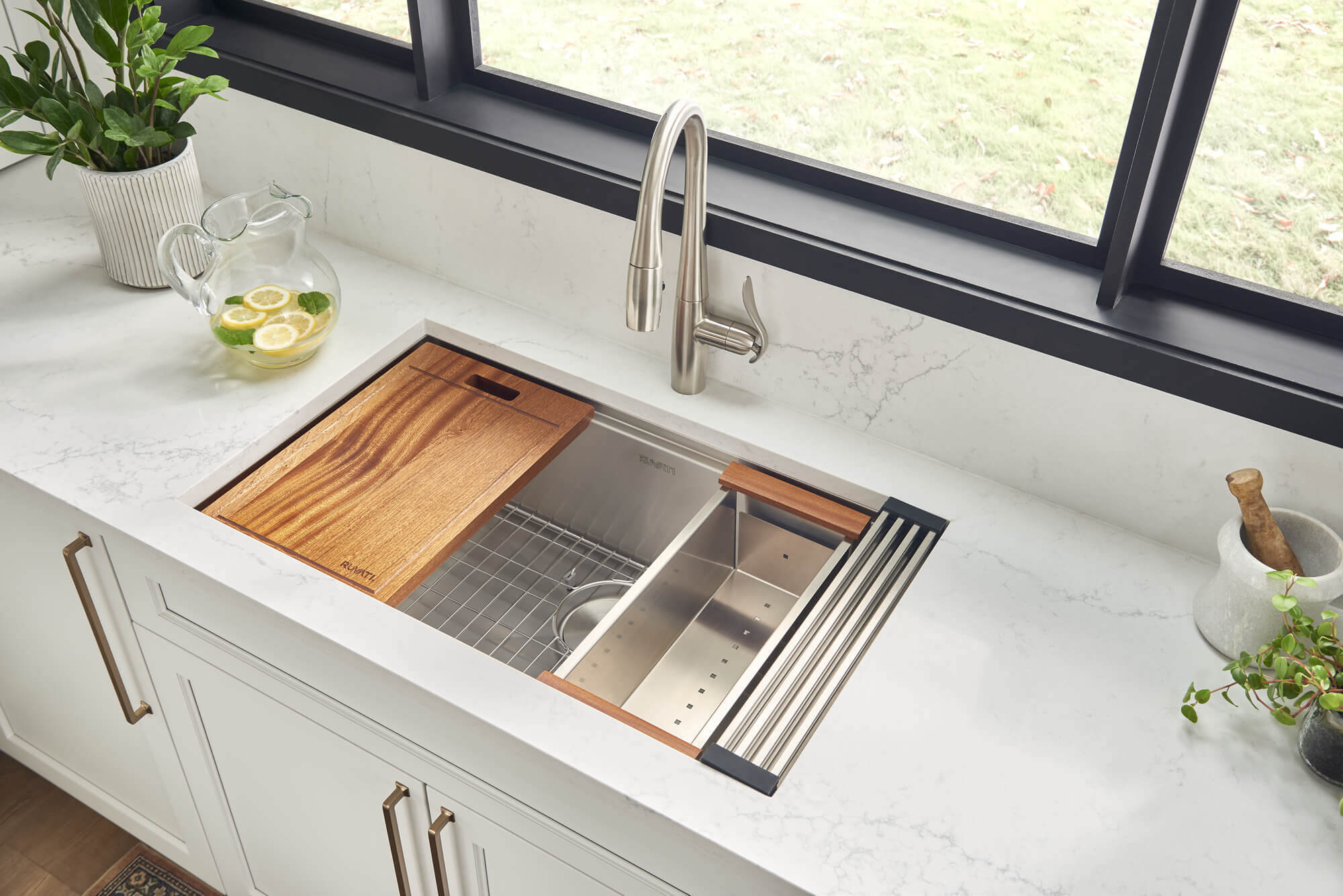
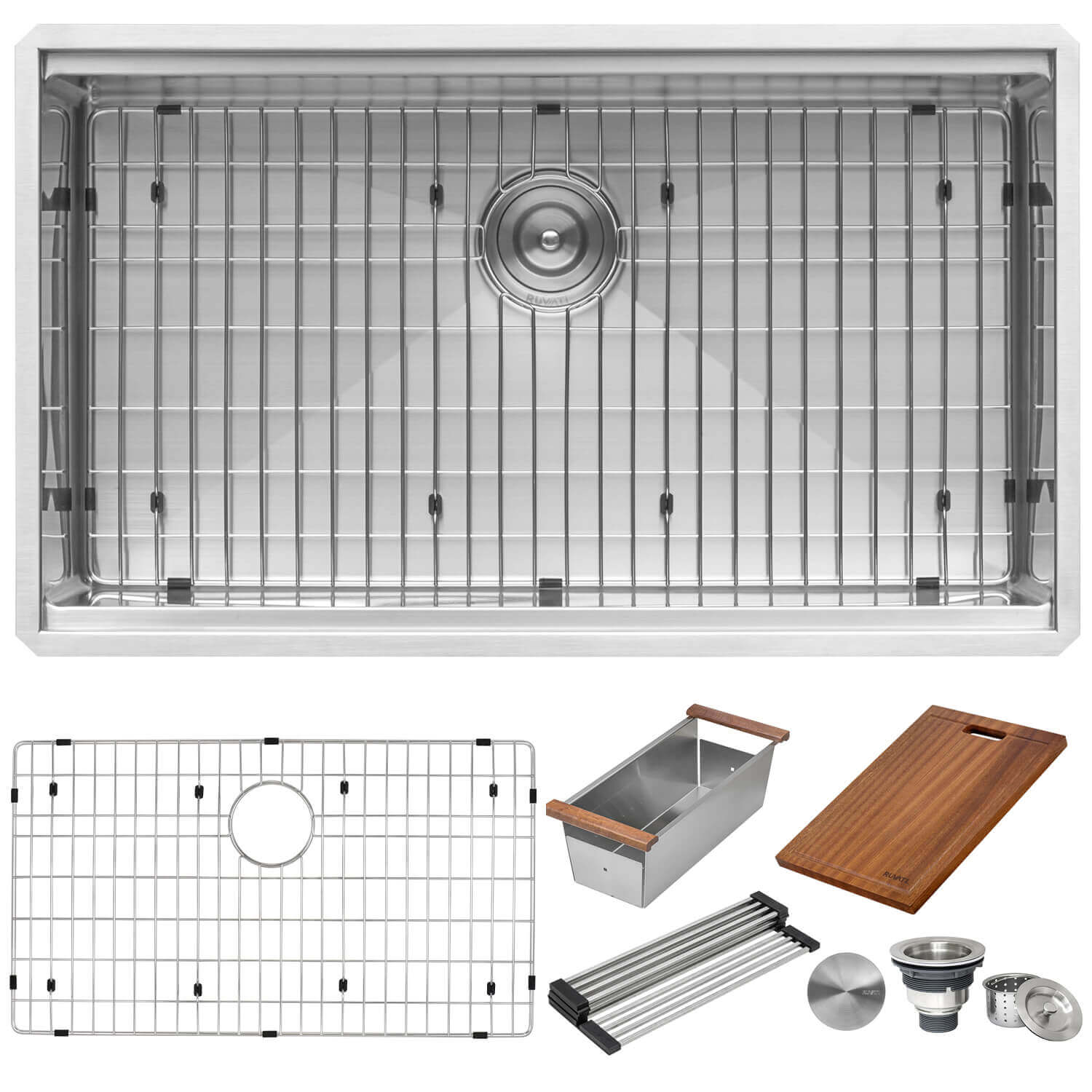
Option C: Workstation sink
A workstation sink can be a better functional upgrade if the farmhouse sink does not fit. Workstation sinks include built-in ledges and accessories such as cutting boards, drying racks, colanders, and grids.
Best for: homeowners who want more prep space, better workflow, and a modern sink upgrade without necessarily exposing a front apron.
Option D: Undermount sink
An undermount kitchen sink can create a cleaner, more seamless look than a drop-in sink. However, undermount sinks usually require solid surface countertops such as quartz, granite, or stone and professional installation.
Best for: remodels with stone or quartz countertops and buyers who want a sleek, modern look.
Which Sink Should You Choose?
Use this decision guide before you order.
| Kitchen Situation | Best Sink Direction | Why |
|---|---|---|
| You want farmhouse style, but want to keep most of your existing kitchen | Retrofit farmhouse sink | Usually, the cleanest path to an apron-front look |
| You are replacing countertops and modifying cabinets | Traditional farmhouse sink | More design flexibility during a full remodel |
| You want the easiest sink replacement | Modern drop-in sink | Lowest installation complexity |
| You want more prep functionality | Workstation sink | Adds accessories and workflow benefits |
| You want a sleek, modern look and have stone counters | Undermount sink | Creates a clean, seamless countertop transition |
The honest answer is that the best sink is not always the most dramatic one. It is the one that works with your cabinet, countertop, installation budget, and daily kitchen habits.

What the Installation Process Usually Looks Like
The exact installation depends on the sink and kitchen, but replacing a drop-in sink with a farmhouse sink usually follows this general sequence.
- Remove the existing drop-in sink and disconnect plumbing.
- Measure the existing cabinet and countertop opening.
- Compare your measurements to the new sink specification sheet.
- Confirm apron height and cabinet front modification requirements.
- Build or add structural support inside the cabinet.
- Dry-fit the sink before making permanent cuts.
- Modify the cabinet front if needed.
- Set, level, and secure the sink.
- Seal the sink according to the installation type.
- Reconnect drain, disposal, faucet, and plumbing connections.
For fireclay farmhouse sinks, test-fitting is especially important. Fireclay is durable, but it is not a flexible material. Poor support, uneven installation, or forced fit can create long-term problems.
For detailed step-by-step planning, use our complete farmhouse sink installation guide.
Need Help Before Ordering?
If you are replacing a drop-in sink with a farmhouse sink, the safest next step is to confirm fit before you buy.
The Sink Boutique has helped homeowners, designers, contractors, and remodelers source premium kitchen sinks since 2018. If you are unsure whether your existing cabinet or countertop will work, send us your sink model, cabinet width, countertop material, and photos of your current sink area.
- Shop retrofit farmhouse sinks
- Shop all farmhouse sinks
- Explore drop-in sink replacements
- Compare workstation sinks
- Contact us for help: Contact The Sink Boutique
Frequently Asked Questions
Can I replace a drop-in sink with a farmhouse sink without changing the countertop?
Sometimes, but not always. It depends on the existing cutout, countertop material, sink shape, and whether you choose a retrofit-friendly farmhouse sink. Stone and quartz countertops are harder to modify than butcher block or some laminate surfaces.
What is the easiest farmhouse sink to install in an existing kitchen?
A retrofit farmhouse sink is usually the easiest option because it is designed for upgrade situations where the homeowner wants an apron-front look with fewer cabinet and countertop changes.
Do I need a new cabinet for a farmhouse sink?
Not always. Some retrofit farmhouse sinks can work with existing cabinets, but the cabinet must still have enough width, apron clearance, and structural support. Traditional farmhouse sinks often require more cabinet modification.
Can a plumber install a farmhouse sink by themselves?
A plumber can handle plumbing connections, but cabinet cuts, support framing, and countertop modifications may require a carpenter, cabinet installer, or countertop fabricator.
What if a farmhouse sink will not work in my kitchen?
If a farmhouse sink is not practical, consider a modern drop-in sink, drop-in farmhouse sink, workstation sink, or undermount sink. These options can still upgrade the kitchen without forcing a difficult apron-front conversion.
Is a retrofit farmhouse sink worth it?
Yes, if you want the farmhouse look without a full remodel. It is especially useful when your existing cabinet and countertop can support the design. Always confirm the specification sheet before ordering.
What should I measure before replacing my drop-in sink?
Measure the existing sink opening, cabinet exterior width, cabinet interior width, countertop material, apron clearance, sink depth, and available plumbing space below the sink.
Should I choose fireclay, stainless steel, copper, composite, or stone?
For easier retrofits, stainless steel and some retrofit-specific farmhouse models are often more forgiving. Fireclay, composite, copper, and stone can be excellent choices, but they require more careful planning around weight, support, and fit.