

A fireclay farmhouse sink has been around for centuries. Its origins date back to Britain in the late 17th century, before running water even existed. These sinks were extremely popular in London and were praised for their aesthetic appeal, functional design, and practical use in high-traffic kitchens of the time. They were used for everything from washing dishes and clothes to bathing small children and pets.
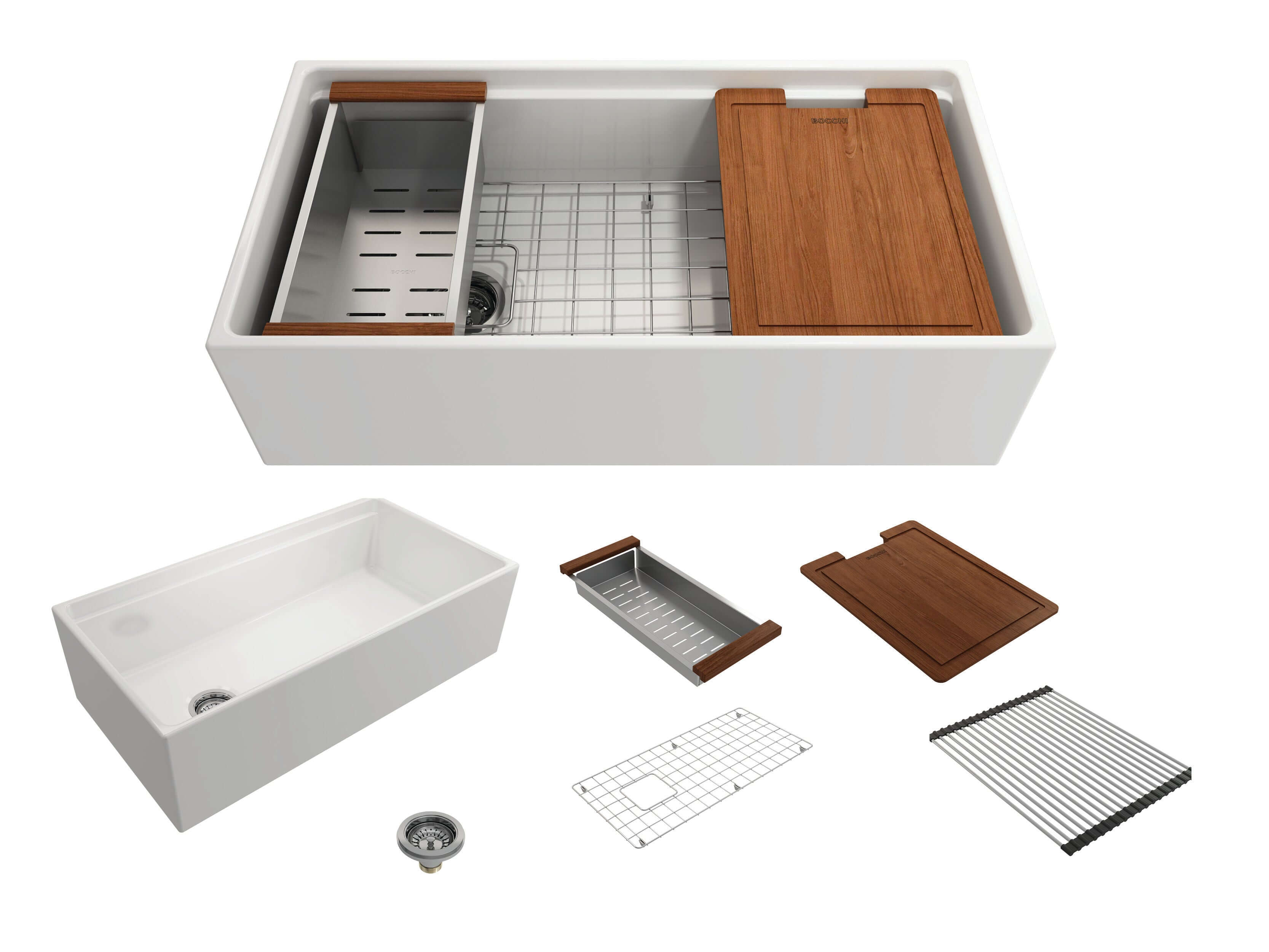
 BOCCHI Contempo 33" Fireclay Workstation Farmhouse Sink with Accessories, White, 1504-001-0120
 It is no surprise that, due to its functional design and timeless, elegant appeal, the fireclay farmhouse sink has seen a resurgence among homeowners in America. Popularized by modern farmhouse design trends and figures like Joanna Gaines, the fireclay farmhouse sink has become a favorite feature in new home kitchens today.
A Comprehensive Guide to a Fireclay Farmhouse Sink
- What is a Farmhouse Sink?
- What is a Fireclay Farmhouse Sink?
- Fireclay Farmhouse Sink Size, Color, and Configuration
- Pick Your Style: Modern or Traditional
- Important Tips Before Installing a Fireclay Farmhouse Sink
- Farmhouse Kitchen Faucet Considerations
- Maintaining a Fireclay Farmhouse Sink
Have additional questions about farmhouse sinks? Read our farmhouse sink FAQs for expert answers and buying tips.
What Is a Farmhouse Sink?
A farmhouse sink, also known as an apron sink, apron-front sink, or farm sink, is a wide, deep-basin kitchen sink with a finished front that remains exposed after installation. Unlike standard sinks, farmhouse sinks typically do not have pre-drilled faucet holes. Faucets and accessories are installed through the countertop or wall.
Because of their generous depth and width, farmhouse sinks can accommodate large pots, pans, and trays with ease. They are valued for their ergonomic comfort, visual impact, and practical functionality.

Traditionally, farmhouse sinks were made from fireclay. Today, farmhouse sinks are available in a wide range of materials, colors, configurations, and styles to suit both traditional and modern kitchens.
A farmhouse sink makes a bold design statement and often becomes the visual centerpiece of the kitchen.
What Is a Fireclay Farmhouse Sink?
Fireclay farmhouse sinks are among the most popular apron-front sink options today. Fireclay is an ultra-durable ceramic material created by firing molded clay at extremely high temperatures. This process produces a dense, non-porous surface that resists stains, heat, and everyday wear.
The clay used to make fireclay sinks is sourced from specific regions, and the hand-finished firing process gives each sink subtle, natural variations. This handcrafted quality is one of the reasons fireclay farmhouse sinks are both durable and visually distinctive.
> Is a Fireclay Farmhouse Sink Worth It?
A fireclay farmhouse sink is often chosen by homeowners seeking a balance of durability, classic design, and long-term performance. Compared to stainless steel, fireclay does not dent easily or show water spots. Compared to granite or quartz composite, it offers a smoother, glossier finish associated with traditional farmhouse kitchens.

This combination of resilience, ease of cleaning, and timeless aesthetic is why fireclay remains one of the most trusted materials for farmhouse kitchen sinks.
> How Is a Fireclay Farmhouse Sink Made?
Fireclay is a type of ceramic created when natural clay and glaze are fused at extremely high temperatures. Most manufacturers fire fireclay sinks at temperatures exceeding 2000°F.
- The clay is poured into molds based on the desired shape and size.
- The molded sink is left to dry in a controlled, mildly heated environment for up to two days.
- Once dry, porcelain enamel is applied by hand.
- The sink is placed in a kiln and fired at temperatures above 2000°F for nearly 24 hours.
- This high-temperature firing fuses the enamel to the ceramic body, creating a non-porous, durable surface.

The result is a fireclay farmhouse sink that resists chips, cracks, stains, and rust. The handcrafted firing process gives each sink subtle variations, which are considered part of its natural character.
For an upscale interpretation of the classic fireclay farmhouse sink, homeowners may also consider alternative materials such as concrete, stone, petrified wood, or copper farmhouse sinks.

Due to the organic nature of fireclay and the hand-finished firing process, minor surface variations such as small bubbles or dimples may be present. These are not defects and do not affect sink performance.
If you prefer a perfectly uniform finish, alternatives such as stainless steel farmhouse sinks or granite and quartz composite farmhouse sinks may be a better fit.
To compare farmhouse sink materials side by side, read our guide to farmhouse sink materials and their pros and cons.
> How Is a Fireclay Sink Different from a Porcelain Sink?
Porcelain sinks are often confused with fireclay sinks, but they are not the same. Porcelain is a ceramic material made from white clay and fired at lower temperatures than fireclay.
Because porcelain sinks are fired at lower temperatures, they are more susceptible to staining, scratching, and chipping. For this reason, porcelain sinks are more commonly recommended for bathrooms rather than kitchens.
Many so-called porcelain kitchen sinks are actually porcelain-enamel-coated cast iron or stainless steel. While these sinks are durable, a chip in the enamel can expose the metal beneath, potentially leading to rust.
Fireclay Farmhouse Sink Size, Color, and Configuration
> The Perfect Size
Fireclay farmhouse sinks are available in a wide range of sizes. The most popular option is the 33-inch fireclay farmhouse sink, followed by 36-inch and 30-inch models.

Kitchen size, cabinet layout, and daily usage should guide your choice. If space allows, a larger sink offers greater interior capacity and flexibility.
One often-overlooked dimension is the front-to-back depth of the sink. While most farmhouse sinks measure around 18 inches front to back, some models offer extra depth for increased bowl capacity. If your countertop allows, wider sinks can significantly improve usability.
Explore wider options from Houzer fireclay farmhouse sinks. If rear clearance is limited, consider pairing a deeper sink with a wall-mounted faucet.
Tip: Farmhouse sinks typically require a base cabinet at least 3 inches wider than the sink. A 33-inch farmhouse sink usually requires a minimum 36-inch base cabinet. View our retrofit farmhouse sink options from BOCCHI, Karran, and Nantucket Sinks.
Sizing note: Do you have a sink in mind? Look up its SKU in Kitchen Sink Fit Check to view the manufacturer's installation specifications and standard cabinet size.
> Choose the Color
While traditional fireclay farmhouse sinks were available only in white, modern options include a wide range of finishes. Available colors now include white, biscuit, gray, dark gray, sapphire blue, brown, black, silver, gold, and gunmetal.

Tip: Glossy finishes reflect more light and highlight color variations, while matte finishes offer a softer, more contemporary look. Color names may vary by brand, even when finishes appear similar.
> The Fireclay Farmhouse Sink Configuration Options
Once size and color are selected, the final decision is sink configuration. You can choose between a single bowl fireclay farmhouse sink or a double bowl fireclay farmhouse sink.
- Single bowl sinks provide uninterrupted space for large cookware, baking trays, and everyday cleanup.
- Double bowl sinks allow separation of washing and rinsing tasks.
- Double bowl options include 50/50, 60/40, and many other configurations.
 Single Bowl from Latoscana, LFS3318W |

Double Bowl from Latoscana, LTD3319W
|
Pick Your Style: Modern & Contemporary or Vintage & Traditional
Choosing the style of your fireclay farmhouse sink is just as important as selecting the size and configuration. Traditionally associated with Victorian homes, cottages, and classic farmhouses, fireclay sinks are now widely used in modern and contemporary kitchens as well.
Typical features of a modern farmhouse sink include:
- Thinner wall thickness
- Straighter, less rounded corners
- Smooth apron fronts
- Neutral or matte finishes such as white, gray, or black
Traditional farmhouse sinks typically feature:
- Thicker walls for a vintage appearance
- Rounded corners
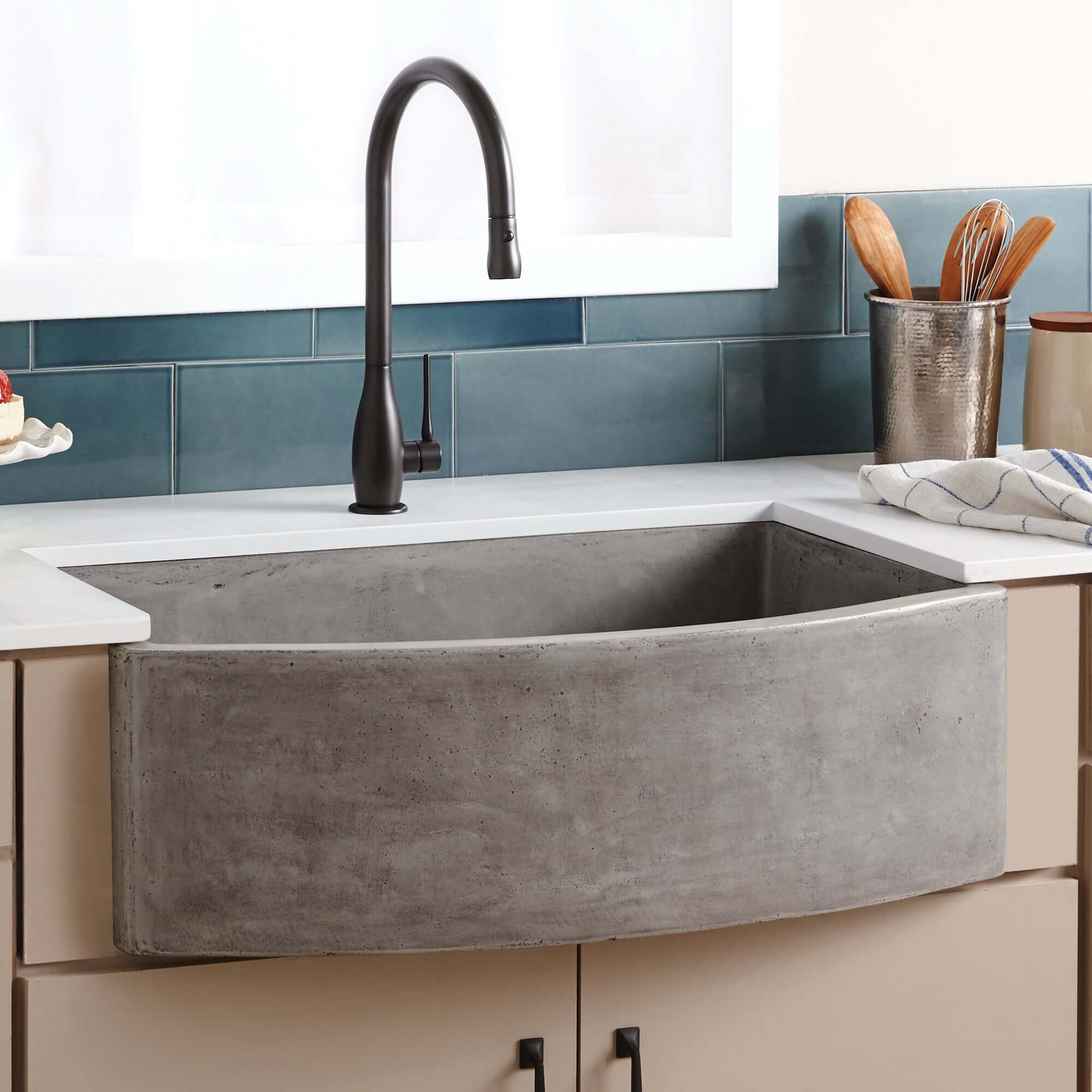
- Decorative apron fronts such as fluted, curved, or arched designs
 |
Some farmhouse sinks are finished on all four sides and are reversible, allowing you to choose which apron front faces outward during installation. This flexibility lets you finalize the look closer to installation time.
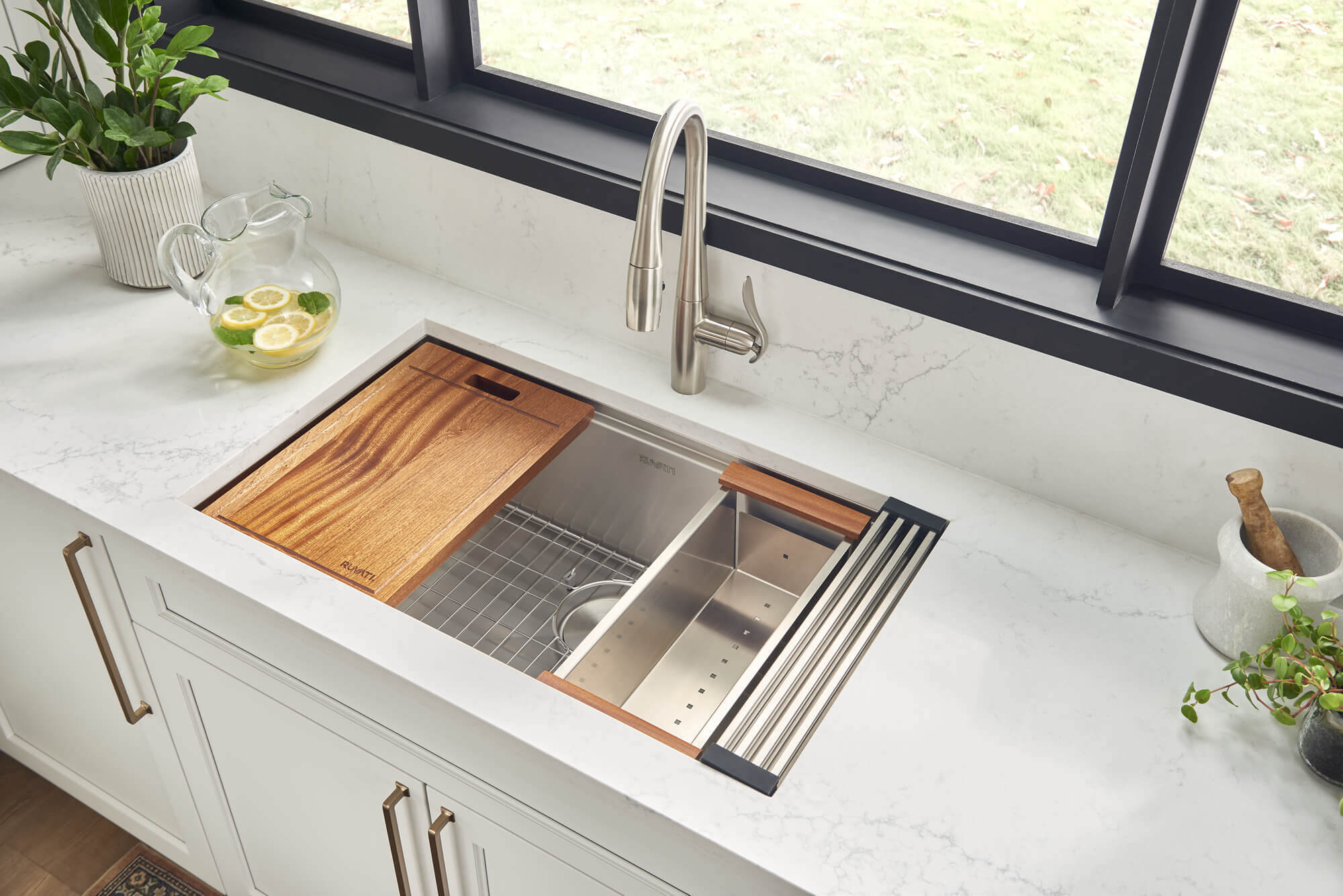
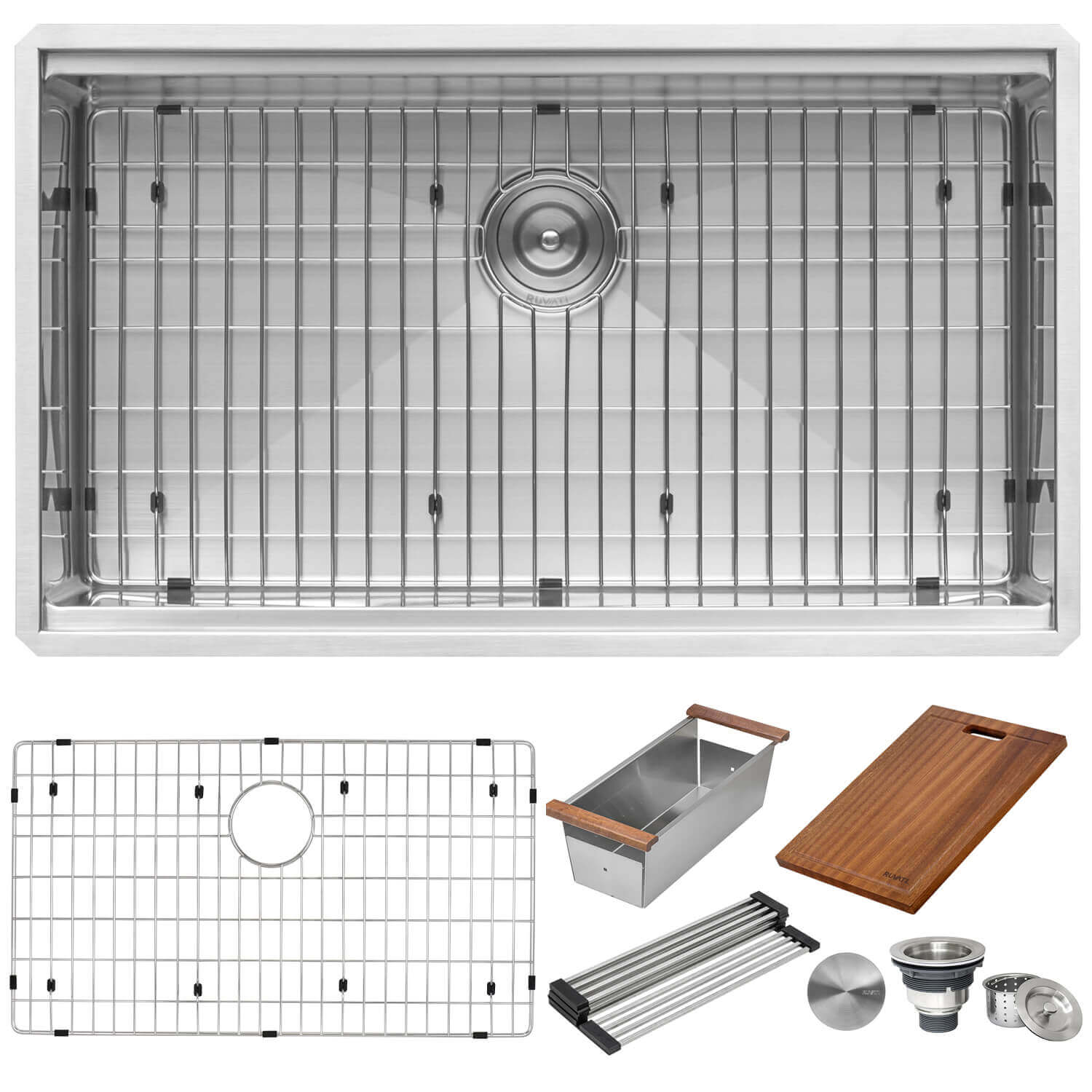
For added functionality, consider a workstation farmhouse sink. These sinks include an integrated ledge system that supports accessories such as cutting boards, colanders, and drying racks—helping keep countertops clear and organized.
Important Tips Before Installing a Fireclay Farmhouse Sink
Installing a fireclay farmhouse sink is very different from installing a standard stainless steel sink. Because fireclay sinks are heavy and handcrafted, professional installation by an experienced installer is strongly recommended.
Most manufacturers recommend installing fireclay farmhouse sinks as undermounts with a front reveal of approximately ¼ inch to 1 inch. Always confirm installation details with your designer and contractor.
If your current setup is a standard drop-in, the switch to a farmhouse sink changes the cabinet, the countertop cut, and the mounting method. We walk through exactly what that conversion involves in our guide on how to replace a drop-in sink with a farmhouse sink.
Key Installation Considerations
- Order your sink well in advance. Fireclay farmhouse sinks can be backordered due to demand. Ordering early also allows time for inspection and replacement if needed.
- Inspect the sink immediately upon delivery. Open all packaging and check for cracks, warping, or shipping damage before installation.
- Confirm cabinet size compatibility. Farmhouse sinks typically require a base cabinet at least 3 inches wider than the sink itself. Here is a detailed farmhouse sink cabinet size requirements guide. For answers to the most common farmhouse sink questions — from cabinet size to material comparisons to trending finishes — see the complete farmhouse sink FAQ.
- Use the actual sink for cutouts. Due to slight dimensional variations (up to ~2%), templates are rarely provided. Cabinets and countertops should be cut using the physical sink.
- Ensure proper structural support. Fireclay sinks are heavy and require a reinforced cabinet base or support frame to hold the sink, water weight, and any garbage disposal.
- Account for vertical clearance. Most farmhouse sinks have a 10-inch apron height, so verify space below for plumbing and disposals.
- Level the sink carefully. Fireclay sinks must be level from both the top and bottom to prevent stress and cracking.
- Plan faucet placement in advance. Farmhouse sinks do not have pre-drilled faucet holes. Faucets are installed through the countertop or wall.
- Use a protective sink grid. Stainless steel grids help protect fireclay surfaces from accidental impacts.
- Drain compatibility. If installing a garbage disposal, drains are typically included. Decorative disposal flanges or basket strainers may be purchased separately for design matching.
Looking for detailed instructions? Read our complete farmhouse sink installation guide.
Farmhouse Kitchen Faucet Considerations
Selecting the right kitchen faucet is essential to both the functionality and appearance of your farmhouse sink.

- Farmhouse sinks do not include faucet holes; installation is through the countertop or wall.
- Measure the front-to-back depth of the sink to ensure adequate faucet clearance.
- Double-check spout height, reach, and clearance for tall cookware.
- Choose finishes based on durability and maintenance—chrome and brushed nickel are among the most resilient.
- Verify compatibility with existing water lines and shut-off valves.
A farmhouse faucet should complement both your sink and kitchen workflow. Balancing design with ergonomics ensures long-term satisfaction.
Explore our guide to farmhouse kitchen faucet styles to find the best match for your sink.
Maintaining a Fireclay Farmhouse Sink
Fireclay farmhouse sinks are easy to maintain with proper daily care. Follow these guidelines to preserve the finish and performance of your sink.

Always:
- Clean daily using mild soap and warm water.
- Use soft cloths or sponges—never abrasive pads.
- Remove standing water to prevent mineral buildup.
- Use baking soda, vinegar, or eco-friendly cleaners for routine maintenance.
- Rinse thoroughly and dry after deep cleaning.
Never:
- Use abrasive or harsh chemical cleaners.
- Use oven cleaners, drain cleaners, or paint removers.
- Scrub with steel wool or scouring pads.
- Store open chemical containers under the sink.
Choosing the Best Fireclay Farmhouse Sink for Your Kitchen
The best fireclay farmhouse sink is one that aligns with your cabinet size, installation method, and daily kitchen habits. Factors such as bowl depth, apron style, finish, and workstation compatibility should guide your decision.
Rather than focusing solely on brand names, evaluate how each sink fits your layout, workflow, and long-term maintenance expectations.
Ready to find the perfect sink? Browse our curated collection of fireclay farmhouse sinks. Have questions? Contact our team, and we will be happy to help.
Not sure if fireclay is right for you? Compare all options in our guide to farmhouse sink materials and their pros and cons.




5 comments
mysink
Finding the perfect farmhouse sink isn’t just about aesthetics! Consider your daily dishes and cabinet space – a deep single bowl for soaking pots or a practical double for multitasking? Pick your material wisely – the timeless elegance of fireclay, the budget-friendly durability of stainless steel, or the rustic charm of cast iron. Think undermount for a seamless look, or abovemount for an easier install. Don’t forget the faucet – a high spout is a must for deeper sinks. Let your chosen sink reflect your kitchen’s style and functionality for a truly harmonious flow. Happy sink-picking!
Benji Thomas
I was so confused about whether I should buy a fireclay sink or not. I wasn’t sure if it is just a trend or evergreen. You have helped me narrow down my options for my new build. Just waiting for the ok from the builder. Your customer service agent was extremely helpful and so pleasant to talk to. I will recommend you guys to our neighbors too. Thanks!
Orville Bunbury
Hi thesinkboutique.com administrator, Keep the good content coming!
JM
Awesome article. Thank you so much!
Moni Chim
Thank you! This truly was a comprehensive guide to farm house sink!