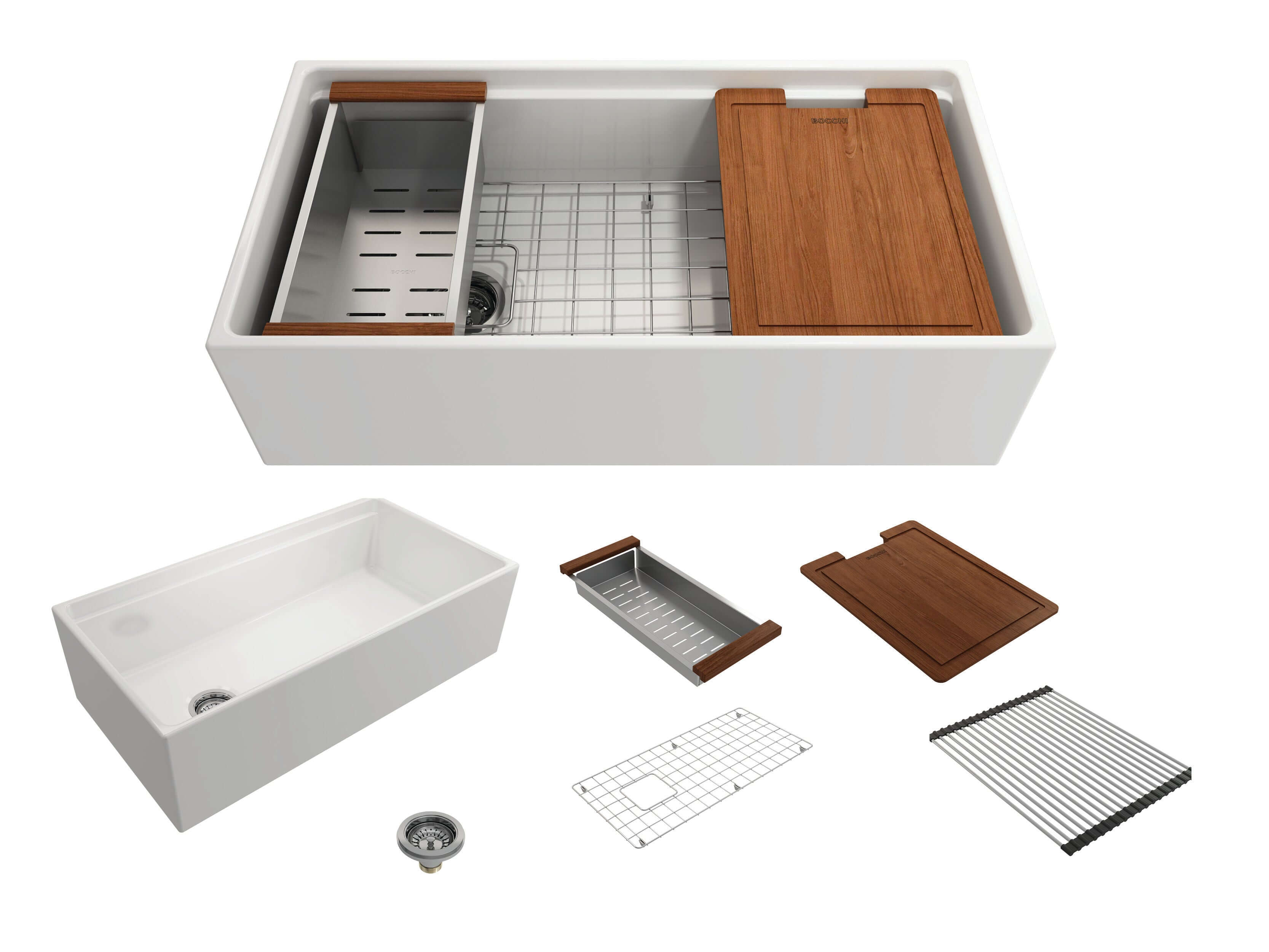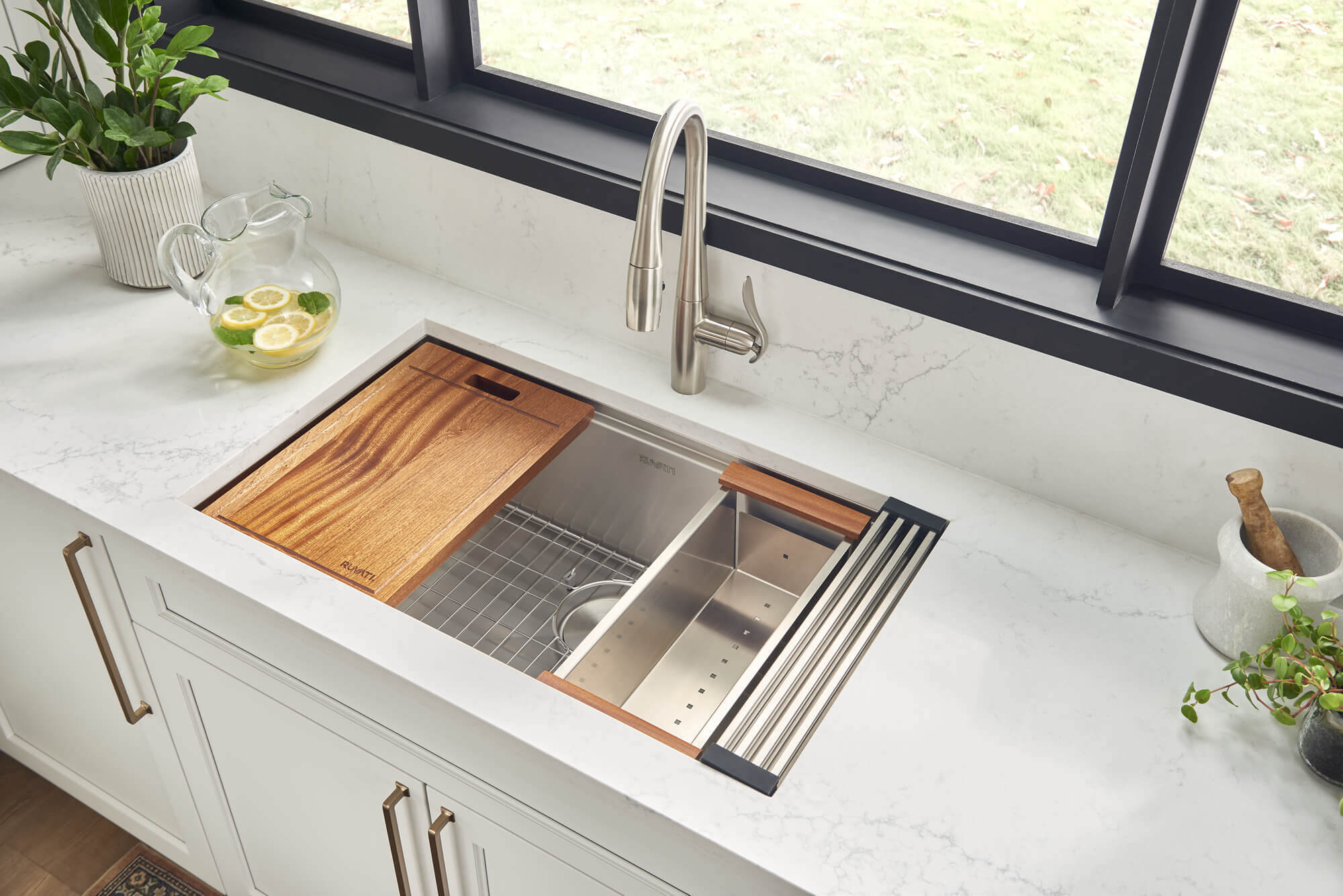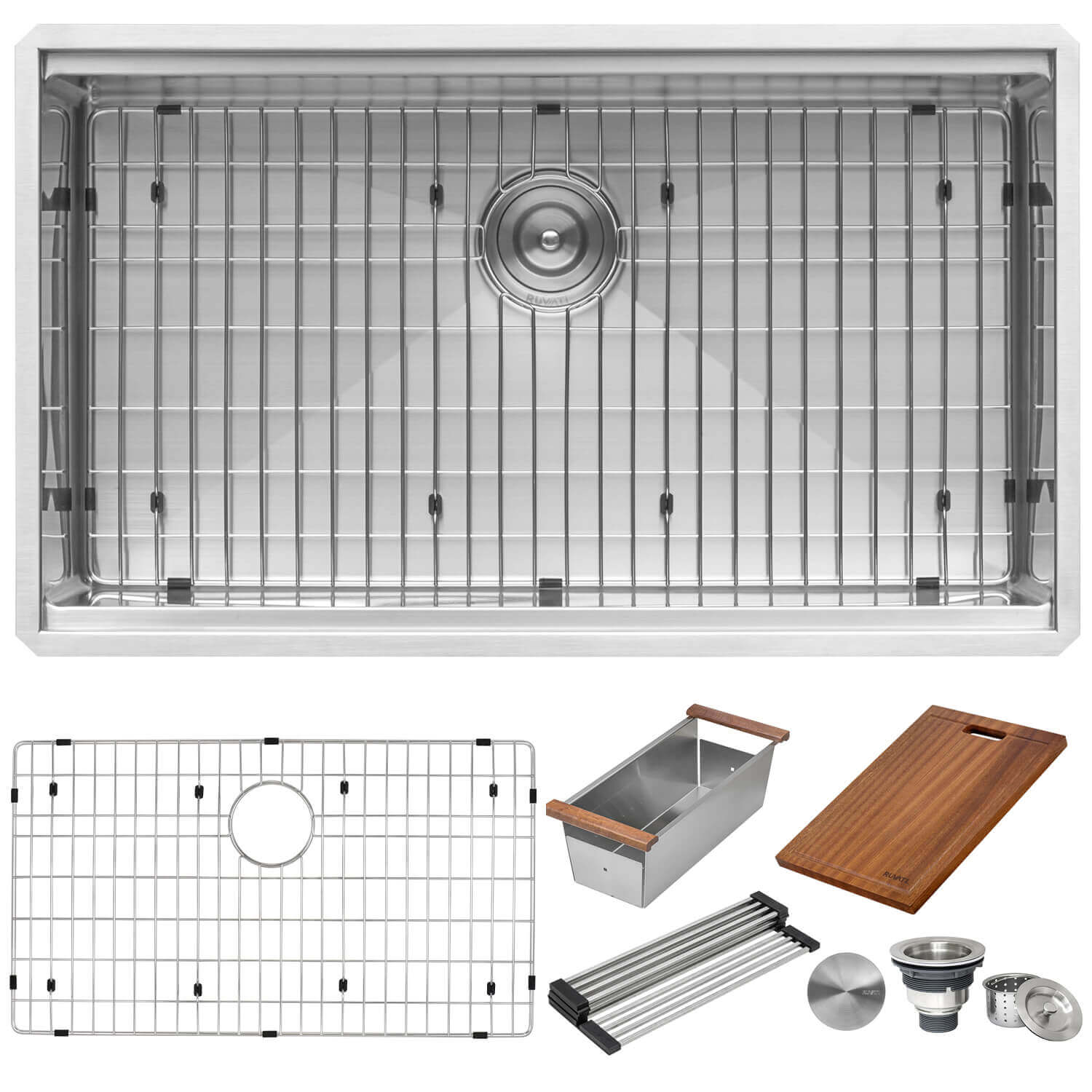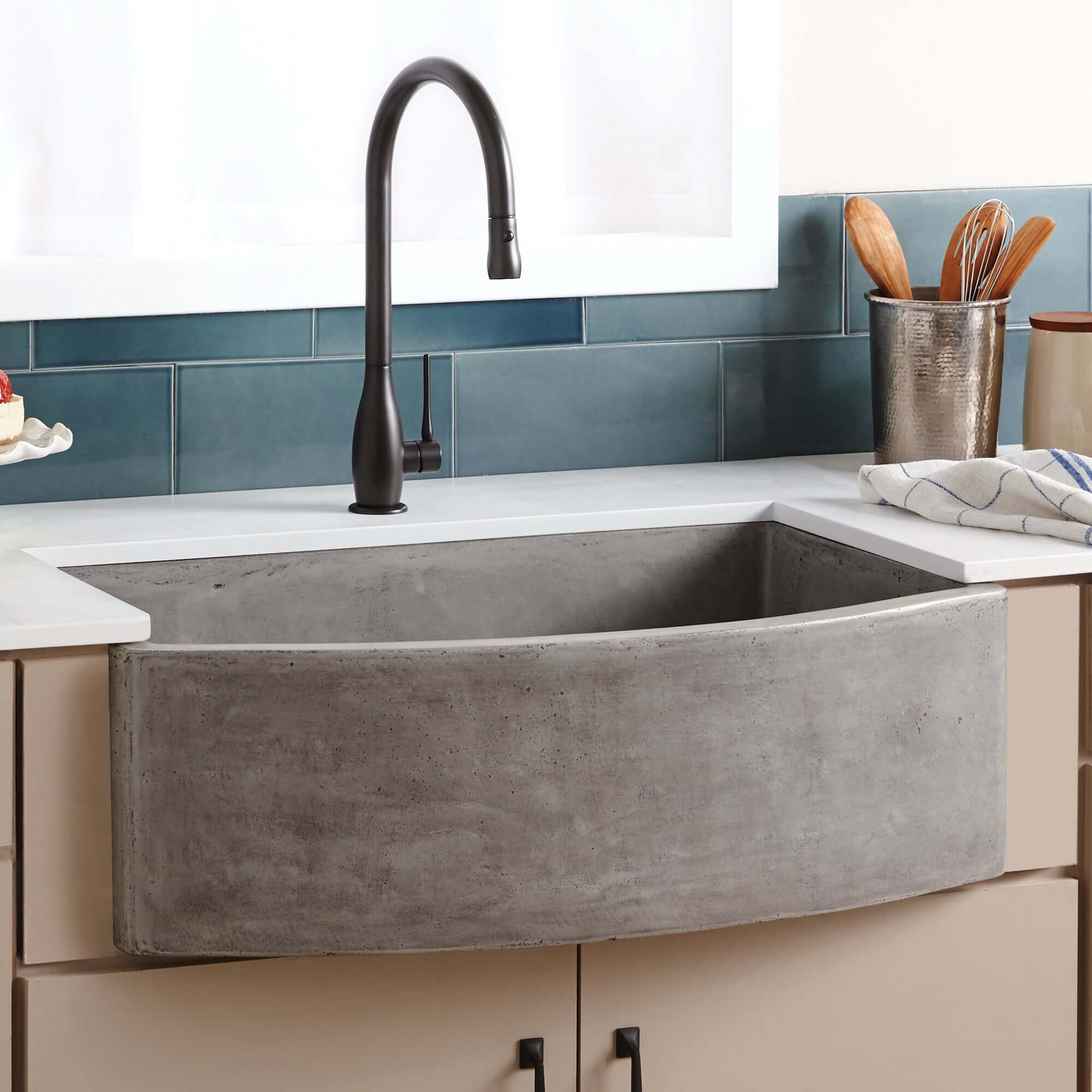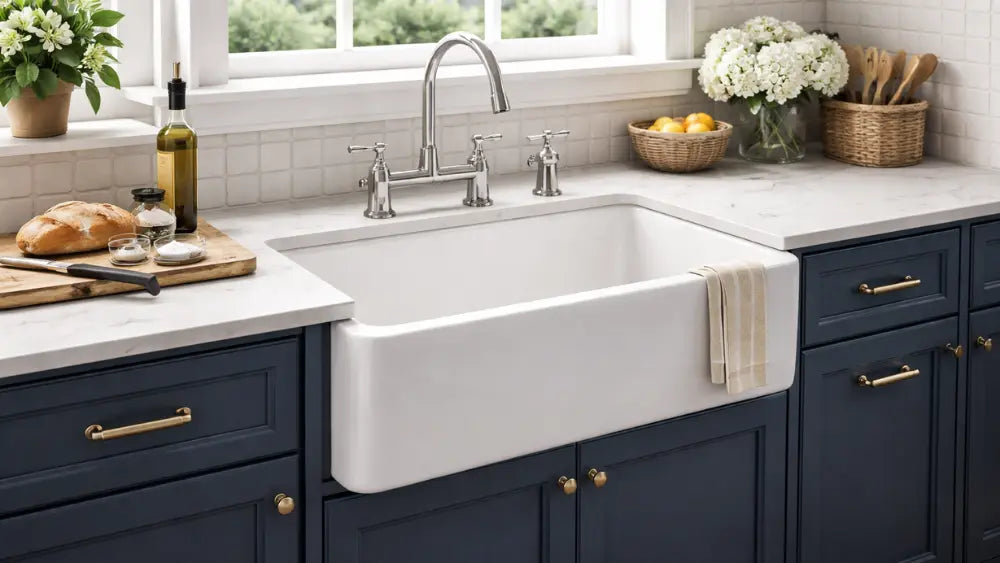
If you’re planning a farmhouse sink (also called an apron-front sink), the most important technical question is:
What size base cabinet do I actually need for a farmhouse sink?
This guide explains the real dimensional math behind farmhouse sink cabinet sizing, including framed vs frameless cabinets, retrofit scenarios, fireclay weight support, and brand-specific considerations.
Sizing note: Do you have a sink in mind? Look up its SKU in Kitchen Sink Fit Check to view the manufacturer's installation specifications and standard cabinet size.
Quick Answer
In most U.S. kitchens:
- 30" farmhouse sink → minimum 33" base cabinet
- 33" farmhouse sink → minimum 36" base cabinet
- 36" farmhouse sink → 36"–39" base cabinet depending on interior width
Important: Always confirm the manufacturer’s specification sheet. Interior cabinet width, not nominal cabinet size, determines fit.
Nominal Cabinet Width vs Interior Opening (The Math Most People Miss)
A “36-inch base cabinet” refers to exterior width. The usable interior opening is often smaller.
Example: Framed Cabinet
- 36" exterior width
- Face frame reduces opening by ~1.5."
- Interior width may be 34.5."
If your farmhouse sink measures 33.875" wide, you may only have 0.625" total clearance.
This is why cabinet sizing mistakes happen, especially with fireclay sinks, which allow little tolerance.

Framed vs Frameless Cabinets (Critical Difference)
Framed Cabinets
- Face frame reduces interior clearance
- More restrictive for apron-front retrofits
- Often require oversizing
Frameless (Euro-Style) Cabinets
- Wider interior opening
- More forgiving for farmhouse sinks
- Common in modern kitchens and IKEA systems
Cabinet construction style directly impacts what size farmhouse sink you can install.
Farmhouse Sink Cabinet Size Chart (Planning Table)
| Sink Width | Typical Min Cabinet | Interior Width Target | Common Use Case |
|---|---|---|---|
| 30" | 33" | ≥ 31.5" | Compact kitchens |
| 33" | 36" | ≥ 34.5" | Most popular size |
| 36" | 36"–39" | ≥ 37" | Large kitchens/workstation sinks |
Shop by size:
Do You Need +3 Inches? (Retrofit vs Purpose-Built Cabinets)
The “+3 inches” rule applies mainly when retrofitting into standard sink bases.
Retrofit Scenario
- Removing the cabinet front rail
- Modifying face frame
- Limited interior clearance
- More structural reinforcement is required
Purpose-Built Farmhouse Sink Base
- Designed for apron-front installation
- Engineered structural support
- No arbitrary oversizing required
For full installation details, see our in-depth guide: Fireclay Farmhouse Sink Installation Guide

Fireclay, Cast Iron & Sink Weight Considerations
Most farmhouse sinks are heavier than standard undermount sinks.
- Fireclay farmhouse sinks often weigh 85–120+ lbs
- Cast iron apron-front sinks can exceed 125 lbs
This means cabinet size alone is not enough; you also need:
- Structural support rails or cradle system
- Reinforced cabinet base
- Level installation surface
We strongly recommend reviewing the spec sheet before purchase. As an authorized retailer working with leading farmhouse sink brands since 2018, our team can help review your sink compatibility before you order.
Fireclay, Copper, Granite Composite & Stone: Cabinet Impact by Material
Fireclay Brands
Bocchi, Latoscana, Ruvati, Nantucket Sinks
- Typically 85–120+ lbs
- Minimal dimensional tolerance
- Require structural cradle or support rails
Copper Farmhouse Sinks
Native Trails, Premier Copper Products
- Lighter than fireclay
- Hand-hammered variations
- Still requires proper apron alignment
Granite Composite
- Precision molded
- Require exact interior clearance
Natural Stone Sinks
- Heaviest category
- Require reinforced cabinet base
- May exceed standard support requirements
Common Cabinet Sizing Mistakes (We See These Often)
- Measuring outside cabinet width only
- Ignoring face frame thickness
- Not checking the interior width after removing front rail
- Assuming all 33" sinks fit in 36" cabinets equally
- Ordering sink before confirming cabinet specs
Since 2018, we’ve helped homeowners and designers avoid these mistakes through pre-purchase compatibility checks.
IKEA Cabinet Compatibility
IKEA SEKTION cabinets are frameless, which often provides more usable interior width than framed cabinets.
However:
- Cabinet box reinforcement is critical
- Apron cutouts must be precise
- Support rails must be installed properly
Always confirm interior opening width before ordering.
Drawer Base & Workstation Sink Considerations
Installing a farmhouse sink into a drawer base requires modification and structural planning.
Workstation farmhouse sinks (common in 33" and 36") may require additional interior clearance due to integrated ledges.
Questions Designers & DIY Homeowners Should Ask
- What is the exact interior width of my cabinet?
- Is my cabinet framed or frameless?
- Is this a true apron-front sink or a retrofit design?
- What reveal style am I planning (flush, proud, recessed)?
- Does my cabinet support 100+ lbs of sink weight?

Best-Selling Farmhouse Sinks
Explore our most popular models trusted by homeowners and designers nationwide:
FAQ: Farmhouse Sink Cabinet Sizing
Can I install a 33-inch farmhouse sink in a 33-inch cabinet?
Usually no. Most 33-inch farmhouse sinks require a minimum 36-inch base cabinet to allow proper structural support and apron cutout clearance.
What happens if my cabinet is too small?
You may not have enough interior clearance for installation, structural support, or proper reveal alignment.
Are farmhouse sinks harder to install than undermount sinks?
Yes. They require structural planning, apron cutout alignment, and weight support — especially for fireclay models.
Does cabinet depth matter?
Yes. Standard base cabinets are 24 inches deep, but interior depth and plumbing placement must be confirmed before installation.
Need Help Confirming Fit?
The Sink Boutique has specialized in farmhouse sinks since 2018. We are an authorized retailer for leading brands including Elkay, Houzer, and Alfi.
- Free sink specification review
- Request a cabinet fit check
- Live chat and phone support
- Price match assistance