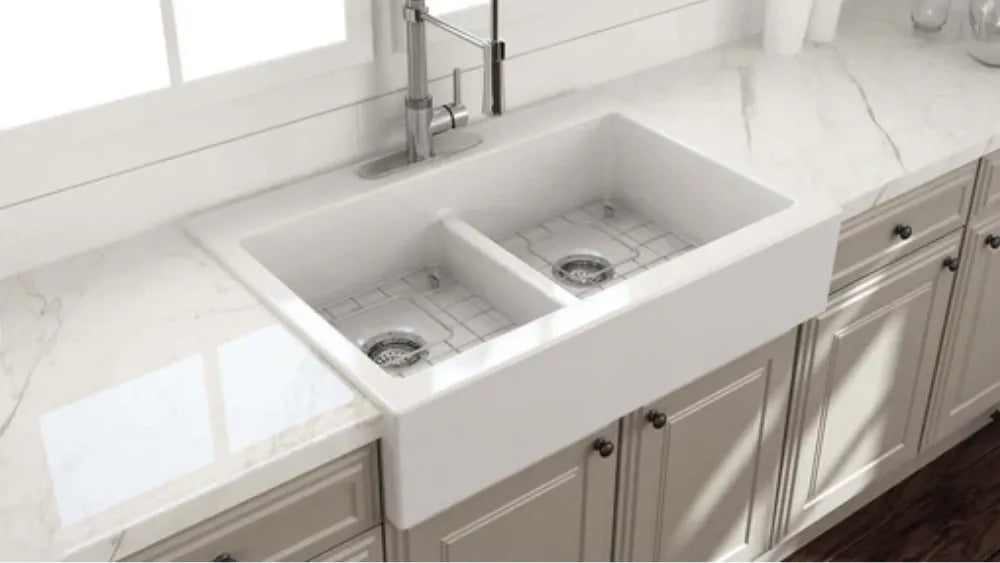
Comparing fireclay vs cast iron sinks is a smart first step when planning a new farmhouse or undermount kitchen layout. Below, we break down durability, maintenance, installation, and real world fit so you can choose with confidence. If you are leaning apron front, browse our curated farmhouse sinks collection for proven, in stock options.

Quick overview
Both materials are kitchen lifers. Fireclay is a ceramic fired at very high temperatures, then finished with a hard, glassy glaze. Cast iron uses a heavy iron core coated in enamel. Fireclay tends to resist chips and stains better, while cast iron brings a classic, glossy look with more weight and cabinet demands.
Durability and materials
Fireclay’s glaze fuses to its clay body during firing. That process creates a highly durable surface that resists scratching and discoloration in busy kitchens. Brands like BOCCHI, Latoscana, and Nantucket Sinks engineer dense walls and smooth glazing for long service life.
Cast iron relies on enamel over a rigid metal core. The enamel is smooth and reflective, but a hard impact from cookware can chip it. If you love the look yet want a lighter alternative, consider stainless steel or granite composite in an apron or undermount format.

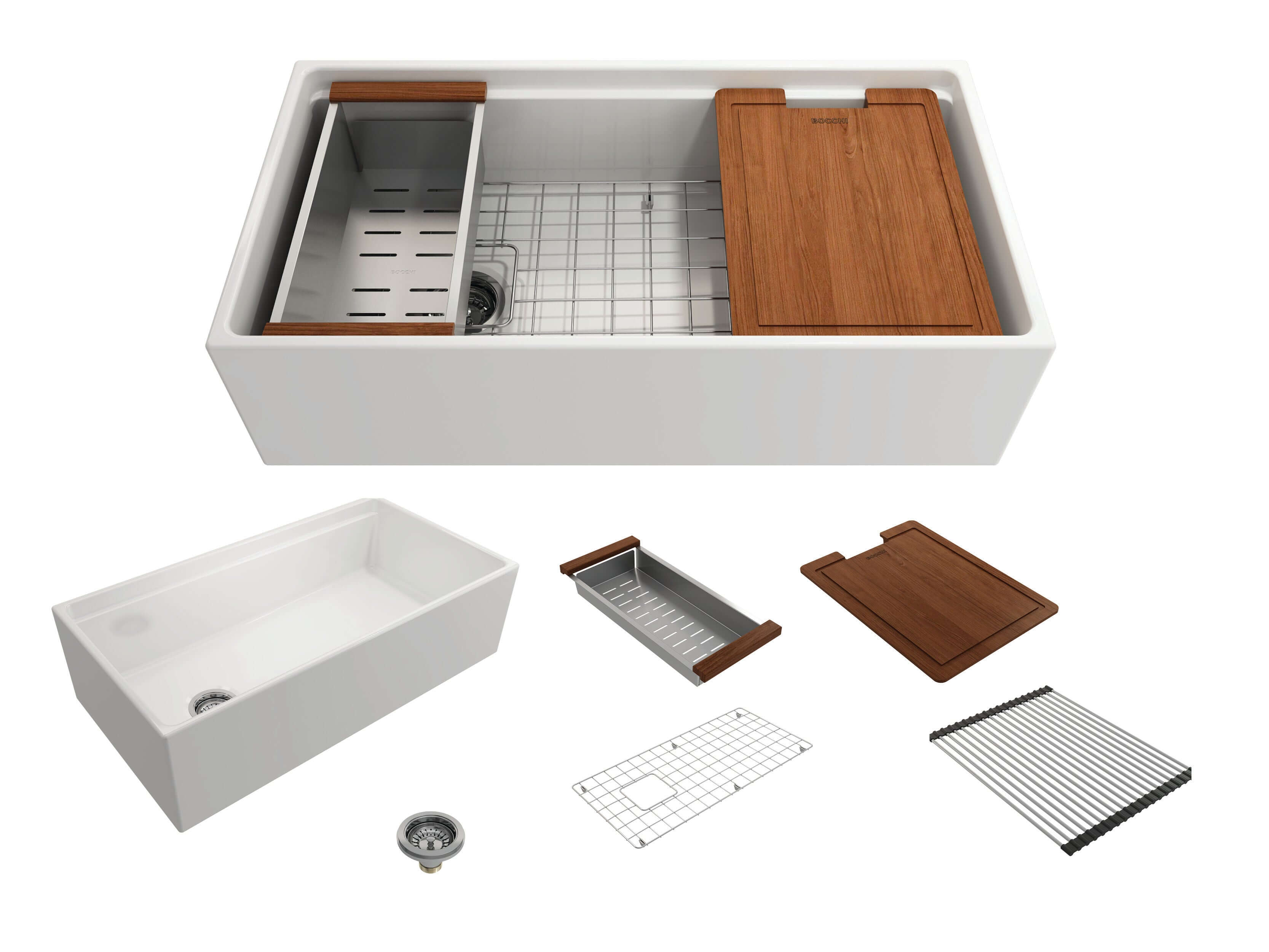
For high-traffic homes, a fireclay farmhouse workstation is a standout. The accessory ledge streamlines prep and protects the basin with a grid. If you often handle heavy cast-iron pans, fireclay is forgiving and cleans up quickly after scrubbing.
Maintenance and cleaning
Day to day, fireclay is simple. Use a soft sponge and mild dish soap. For marks, a gentle cleanser like Bar Keepers Friend or a magic eraser keeps the glaze bright. Keep a bottom grid in place to avoid sliding metal across the surface.
Cast iron enamel is also smooth, but scuffs can show. Avoid abrasive pads that dull the shine. If an enamel chip exposes metal, touch-up kits can help, though the repair may remain visible. If low maintenance is your goal, fireclay has the edge.
Installation, weight, and support
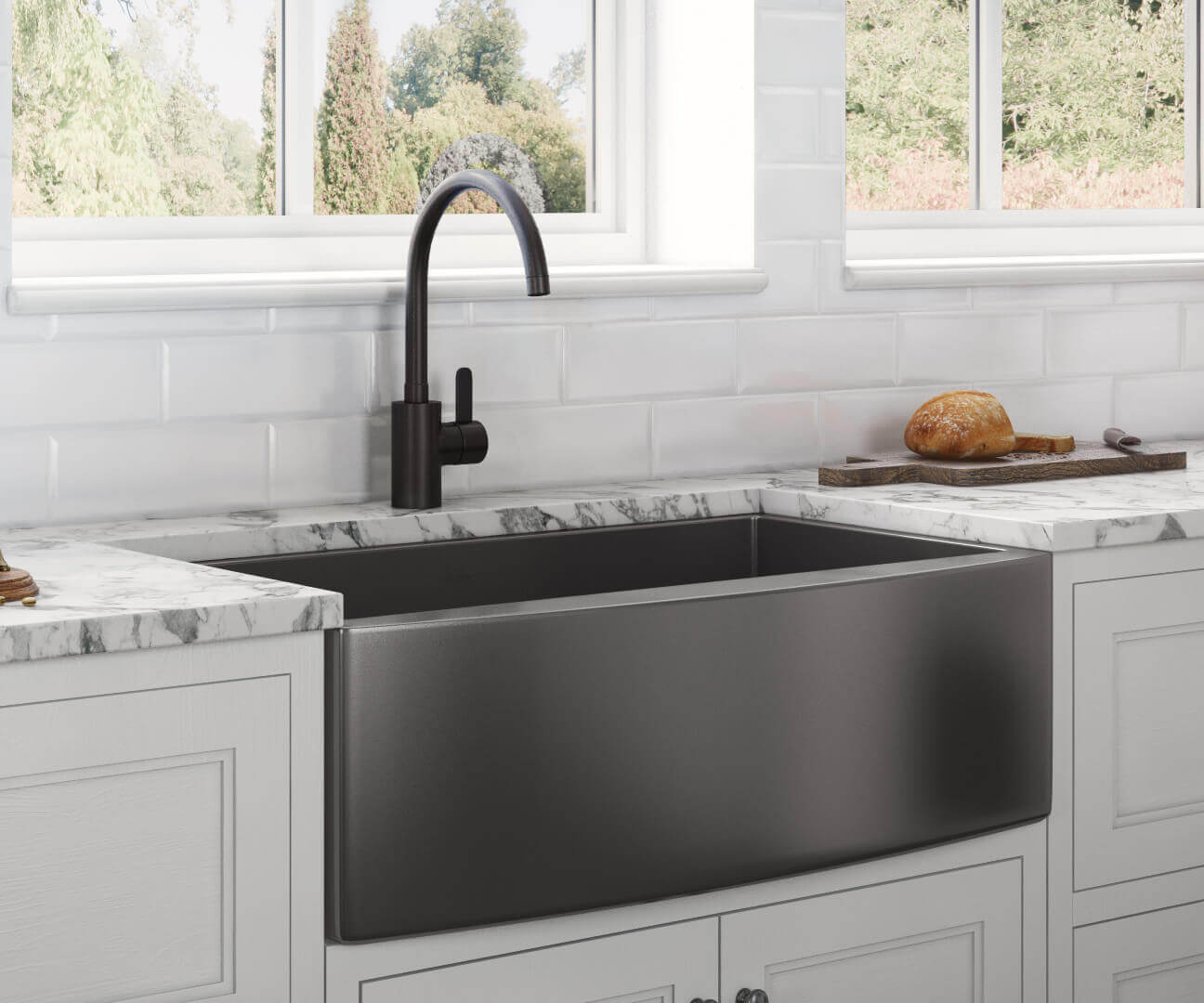
Fireclay farmhouse sinks typically weigh 80 to 120 lbs. Cast iron models can be similar or heavier. Both require careful planning for apron support, especially in a 33-inch or 36-inch base cabinet. Your installer may add rails or a cradle under the rim for proper load transfer.
For undermount projects, confirm the reveal style and countertop thickness before cutting. Many fireclay models offer undermount, flush, or slightly raised installs. If you are retrofitting an existing kitchen, look for retrofit apron designs that fit standard cabinetry without a full rebuild.

Cost, brands, and styles
Cast iron enamel is anchored by brands like Kohler, including the iconic Whitehaven profile. If you want a similar look with lower maintenance and flexible installation, fireclay is an excellent alternative with wide style coverage across farmhouse, undermount, and workstation formats.
Popular fireclay choices in our store include BOCCHI Classico and Contempo, Latoscana apron models, and detailed fronts from Nantucket Sinks. If you are comparing Whitehaven to other options, start here: Kohler Whitehaven alternatives. For a deeper material primer, see our Comprehensive Fireclay Guide.
Head-to-head comparison
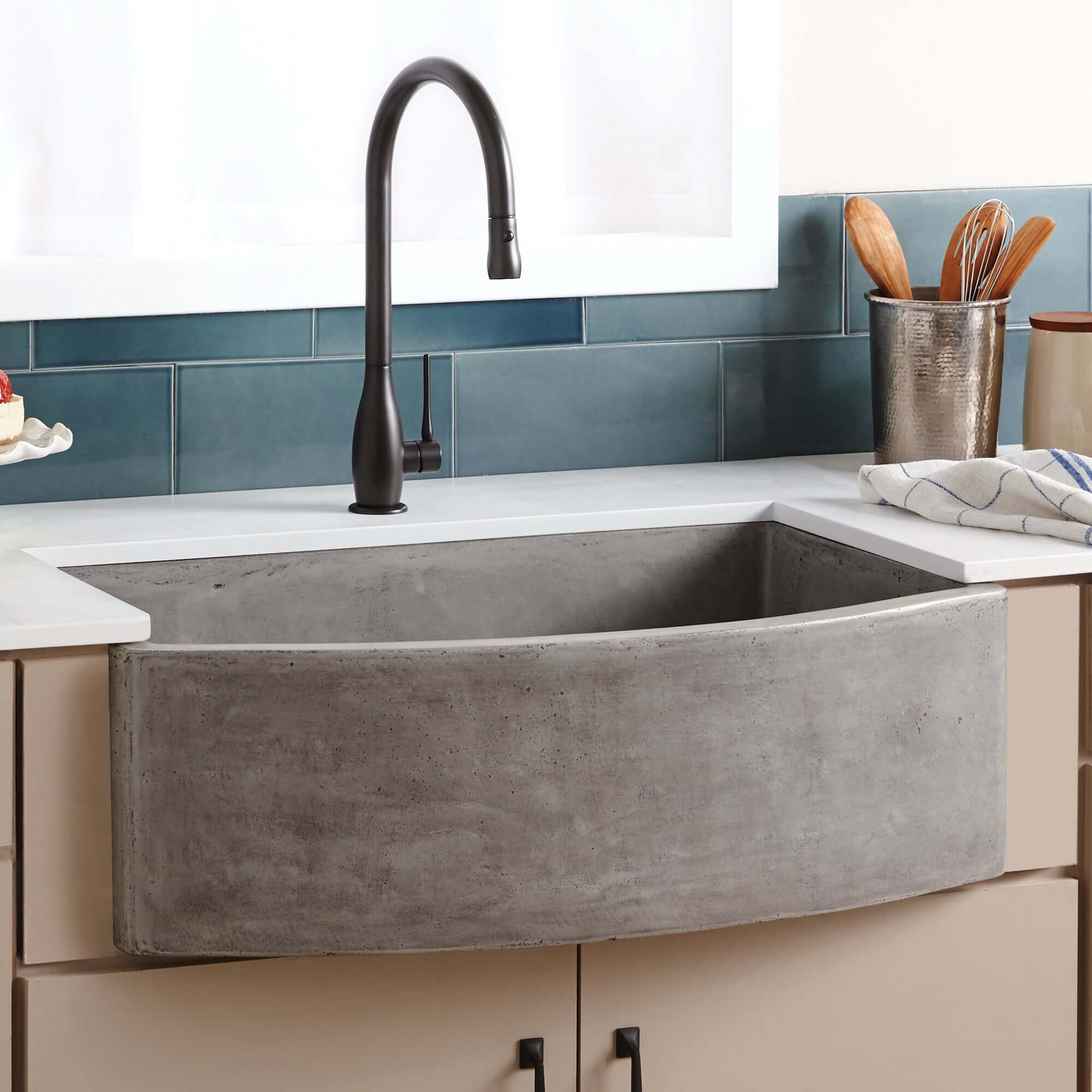
Decorative fireclay apron fronts deliver classic character with rugged daily performance.
| Material | Durability | Maintenance | Best For |
|---|---|---|---|
| Fireclay | Highly durable glaze resists chips and stains, ideal for heavy cookware and daily prep | Simple cleaning with a soft sponge, occasional gentle cleanser for marks | Farmhouse, undermount, workstation layouts where low upkeep is key |
| Cast Iron (enamel) | Rigid and long lasting, enamel can chip if struck hard by pots | Gentle cleaners recommended to protect shine, touch up kits for chips | Classic glossy look, traditional apron front aesthetics |
| Stainless Steel | Tough and repairable with 16-gauge options for quieter use | Wipe dry to limit water spots, use a grid to prevent scratches | Modern undermount kitchens, utility and bar sinks |
| Granite Composite | Scratch and heat-resistant surface with stone like feel | Non porous blend resists stains, routine soap and water | Matte finishes, drop in or undermount installs |
| Material | Weight Range | Cabinet Requirements | Installation Types |
|---|---|---|---|
| Fireclay | ~80 to 120 lbs | Apron support rails or cradle, confirm 33 in or 36 in base | Farmhouse apron, undermount, flush, retrofit, workstation |
| Cast Iron | ~90 to 140 lbs | Robust reinforcement, careful handling to protect enamel | Farmhouse apron, undermount |
| Stainless Steel | ~20 to 40 lbs at 16-gauge | Standard support, consider sound deadening pads | Undermount, topmount, workstation |
| Granite Composite | ~35 to 65 lbs | Standard support, check cutout template | Undermount, drop-in |
Ready to choose your sink with confidence?
Shop proven, highly durable fireclay options that deliver the classic apron look with low maintenance. Explore our best sellers and see workstation accessories that elevate prep.
Next in Topic Cluster: Looking for alternatives to the Kohler Whitehaven Farmhouse Sink?