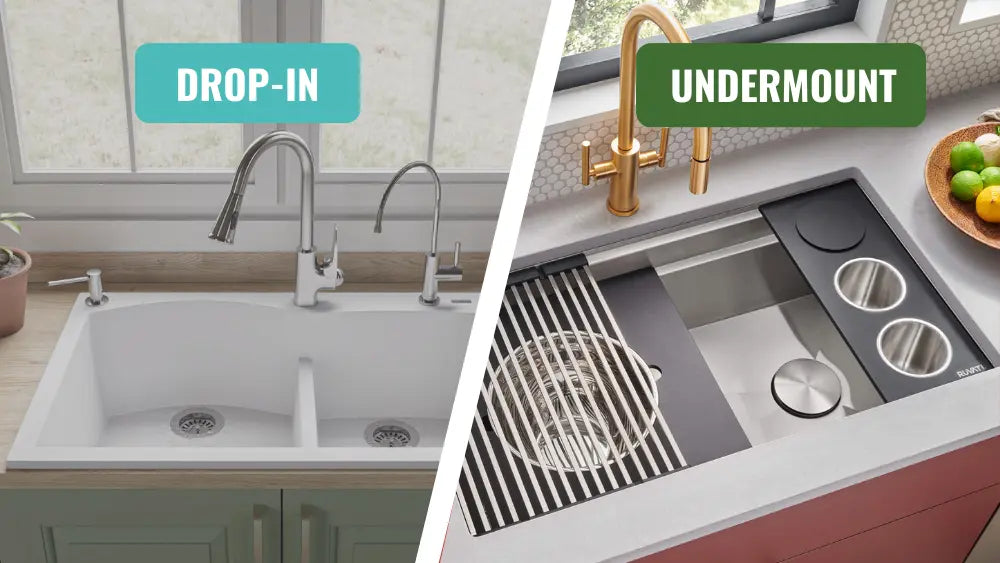
Comparing a drop in vs undermount sink is one of the first choices in any kitchen refresh. These are the two most common installation types, each with a distinct look, cleaning experience, and installation approach. In this guide, we define both styles, compare pros and cons, and help you match each to your countertop and budget. To browse options as you read, see our drop-in kitchen sinks collection.

What is a drop-in sink?
A drop-in sink, also called top mount or self rimming, drops into a cutout and rests on the counter with a finished rim. It is widely available in stainless steel, granite composite, enamel-coated steel, and fireclay. Most include clips and a template, so a careful DIYer can handle installation. Drop-in designs work well with laminate and tile counters because the counter edge is not exposed.
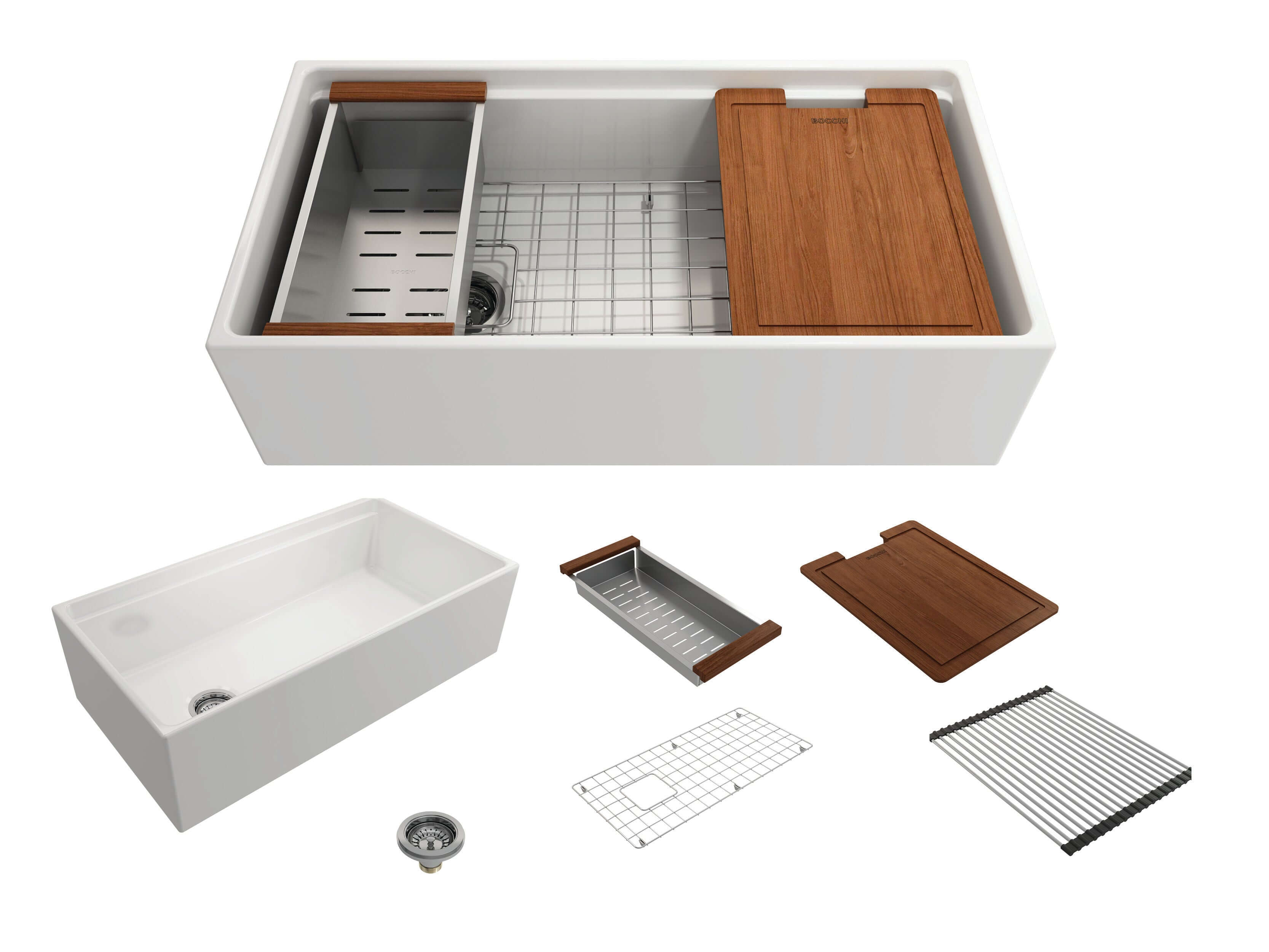
Modern options include 16-gauge stainless for durability, granite composite bowls that resist scratches and heat, and fireclay styles that deliver a timeless, glossy finish. Weight ranges from about 20 to 80 lbs, depending on the material. Deeper workstation variants add ledges for accessories like colanders and cutting boards.
What is an undermount sink?
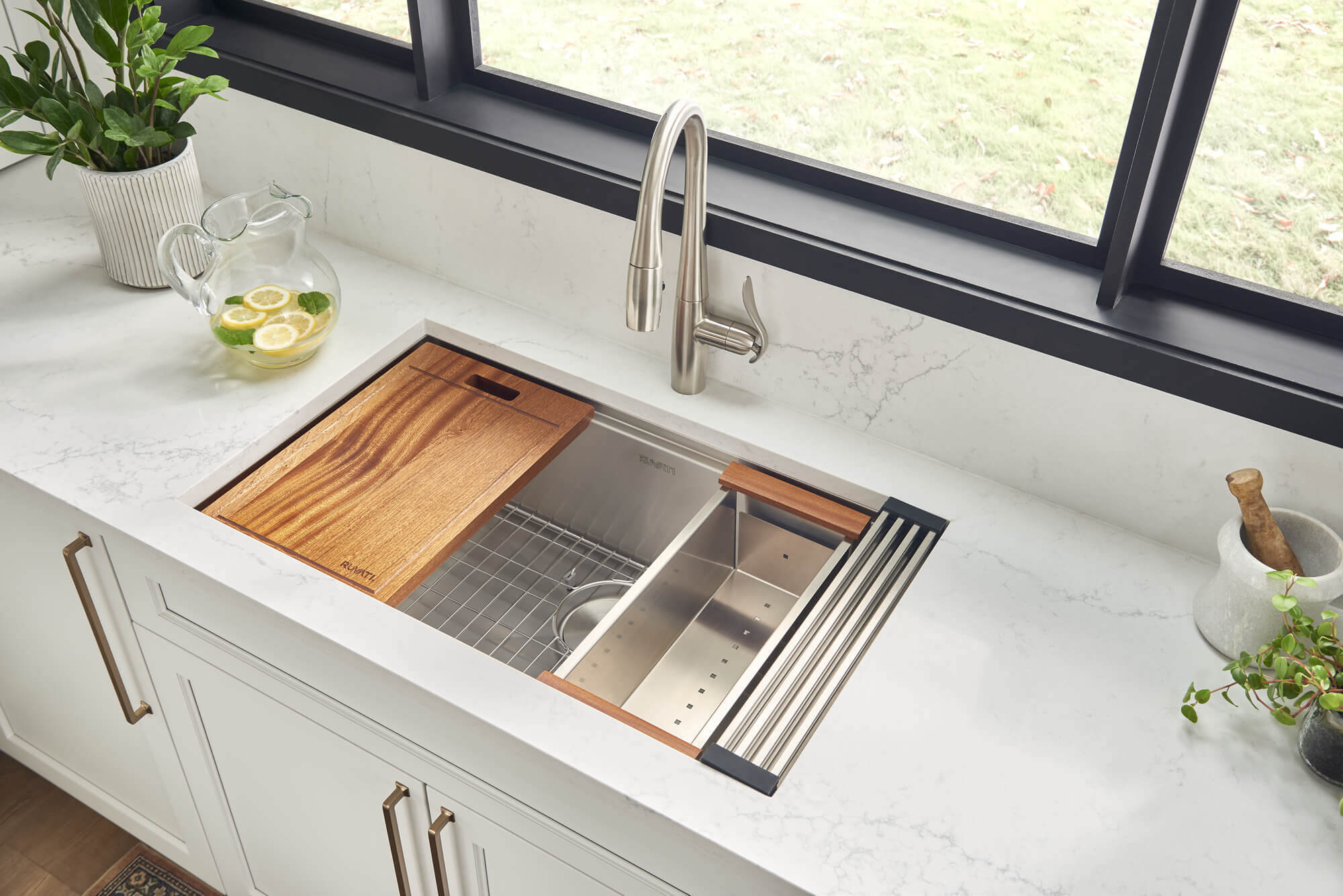
An undermount attaches below the countertop with a solid surface reveal. Quartz, granite, and solid surface counters are typical because the exposed edge can be finished and sealed. The result is a sleek look and easy cleanup. You can sweep crumbs straight into the bowl with no rim in the way. Professional installation is recommended to level, seal, and support the bowl weight.

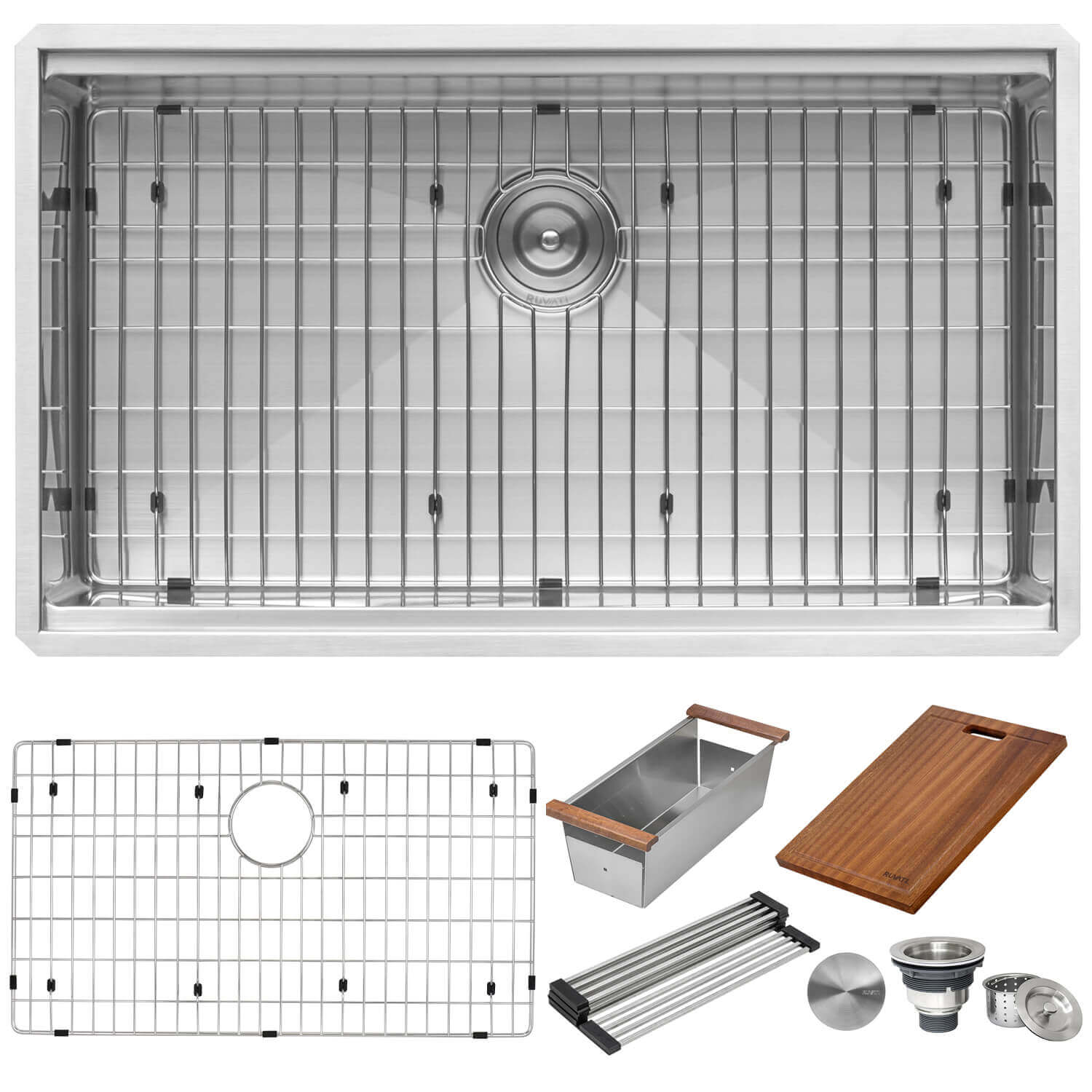
This Nantucket Sink is a practical, two-tiered stainless steel undermount sink with accessories that is sleek and makes clean up easy.
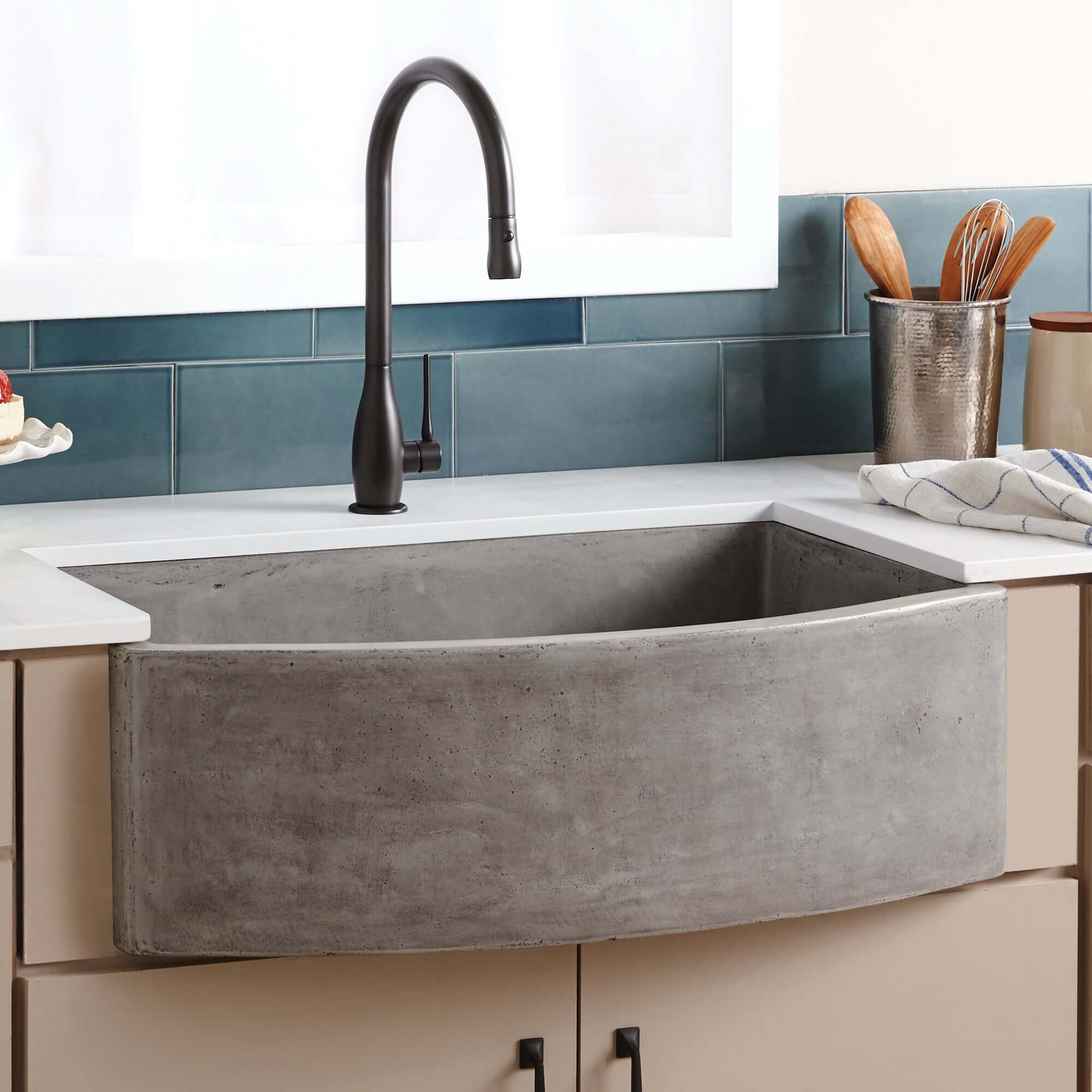
Materials range from fireclay to stainless steel and granite composite. Many premium stainless models use 16-gauge steel for strength and a quieter wash with sound pads. Fireclay undermounts are highly durable and resist high heat. Typical weights range from 30 to 120 lbs, so cabinet bracing and correct mounting rails are important.
Drop-in sinks: pros and cons
| Aspect | What to know | Best For |
|---|---|---|
| Installation | DIY friendly using clips and sealant. The rim supports the bowl. Minimal countertop fabrication. | Quick remodels, rentals, budget projects |
| Cleanability | Rim can collect water and crumbs. Wipe and dry after use for best results. | Homes fine with light rim maintenance |
| Countertop fit | Works on laminate, tile, wood, and solid surfaces. Edge is covered by the rim. | Laminate or tile counters, retrofit installs |
| Look & Materials | Traditional to modern. Options in 16-gauge stainless, granite composite, and fireclay. | Versatile style choices with lower cost |
Undermount sinks: pros and cons
| Aspect | What to know | Best For |
|---|---|---|
| Installation | Typically requires pro install, solid surface counters, and secure mounting. Check cabinet support and rails. | New countertops, high end remodels |
| Cleanability | Seamless wipe from counter into bowl. Less splash retention at the edge. | Busy kitchens, frequent cooking |
| Countertop fit | Ideal with quartz, granite, solid surface. Laminate requires specialty edging to protect the core. | Stone or solid surface tops |
| Look & Materials | Sleek, contemporary. Popular in 16-gauge stainless, fireclay, and granite composite. | Modern, minimal kitchens |
Cost and installation factors
Cost depends on material, gauge, accessories, and fabrication. Drop-in sinks avoid edge polishing and usually cost less to install. Undermounts add time for leveling, clamping, sealing, and finishing the exposed counter edge. Fireclay and stone can weigh 60 to 120 lbs, so build proper support rails in the base cabinet and confirm minimum cabinet sizes.
- Typical install ranges: Drop-in about $150 to $600, undermount about $300 to $900, excluding plumbing changes.
- Countertop compatibility: Drop-in works on nearly all surfaces. Undermount pairs best with quartz, granite, and solid surface.
- Maintenance: Stainless steel benefits from a quick wipe to reduce water spots. Granite composite resists heat and scratches. Fireclay delivers a glossy, easy-to-clean surface.
- Noise and feel: 16-gauge stainless with sound pads feels quieter. Heavier fireclay dampens noise naturally.
For apron front installs and reveal options, see the related Farmhouse Sink Installation Guide.
Which should you choose?
Choose a drop-in if you want an easier install, a budget friendly path, or if you have laminate or tile counters. You get wide material choices and simple replacement down the road. Choose an undermount if you value clean lines, quick wipe downs, and you are pairing with a stone or solid surface top and professional installation.
Ready to compare real products side by side? Browse our undermount kitchen sinks and drop-in kitchen sinks. For example, consider a granite composite drop-in for impact resistance or a 16-gauge stainless undermount for a sleek, professional feel.

FAQs
What is the main difference between drop in and undermount sinks?
Drop in sinks rest on the countertop with a visible rim, while undermount sinks attach below the counter for a rimless look. That rim affects both cleaning and installation requirements.
Which sink type is easier for DIY installation?
Drop in sinks are easier for DIY installation because the rim supports the basin and mounting clips are straightforward. Undermount installs usually require professional support and countertop fabrication.
Do undermount sinks need specific countertops?
Yes. Undermount sinks pair best with solid surfaces like quartz, granite, or solid surface tops. Laminate and tile edges can be tricky because the exposed edge must be sealed and finished.
Which option is easier to keep clean day to day?
Undermount sinks are easier to keep clean because you can wipe crumbs straight into the bowl without catching on a rim. Drop in rims can collect water and debris unless dried after use.
Are drop in sinks considered outdated today?
No. Modern drop in sinks in stainless steel, granite composite, and fireclay look current and perform well. They remain a smart choice for budget projects or laminate countertops.
How should I decide between drop in and undermount?
Choose drop in for easier DIY installs, tighter budgets, and laminate counters. Choose undermount for a sleeker look, faster counter wipe downs, and solid surface countertops with pro installation.
Find Your Perfect Fit
Explore quality sinks in stainless steel, fireclay, and granite composite. Compare 16-gauge stainless durability, glossy fireclay finishes, and granite composite strength.
Explore Drop-In Sinks Shop Undermount Sinks