Jump to: What is fireclay? | What is stainless steel? | Durability | Maintenance | Cost | Which is right for you? | Our recommendation
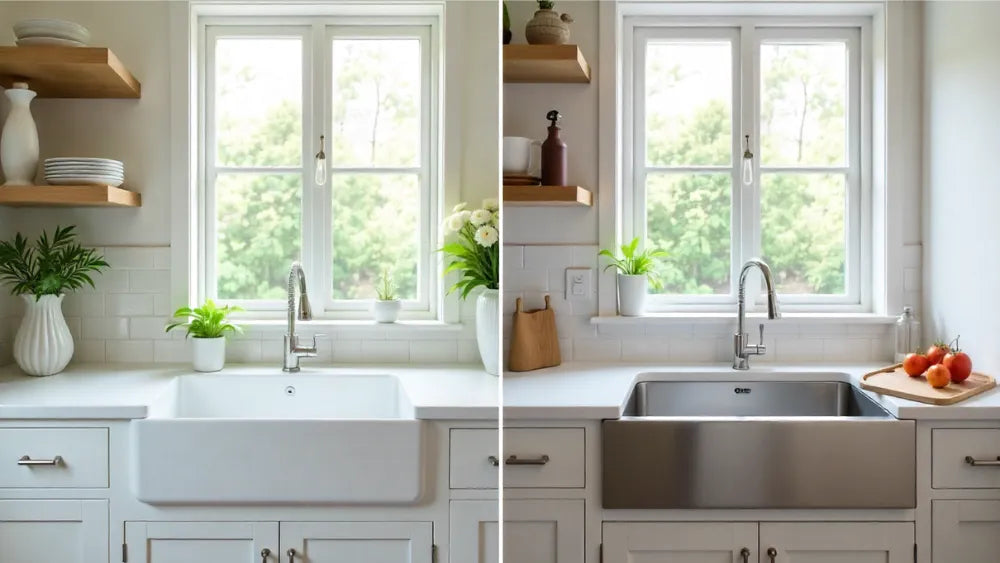
Two materials dominate the premium kitchen sink market: fireclay and stainless steel. They look different, feel different, and hold up differently over years of daily use. This guide breaks down exactly how they compare on durability, maintenance, cost, and fit, so you can make a confident decision before you order.
The Sink Boutique has served 50,000+ customers since 2018 as an authorized dealer for BOCCHI, Ruvati, Blanco, and more. The comparisons below are based on real purchase and installation data, not manufacturer copy.
| Material | Durability | Maintenance | Price Range | Best For |
|---|---|---|---|---|
| Fireclay | Extremely hard, heat-resistant, chip-resistant glaze | Easy to clean, resists stains and discoloration | $650 to $1,800+ | Farmhouse, traditional, and design-forward kitchens |
| Stainless Steel | Flexible, impact-tolerant, rust and corrosion resistant | Low maintenance, wipe dry to prevent water spots | $300 to $1,200+ | High-traffic, family, modern, and rental kitchens |

What is fireclay, and how is it made?
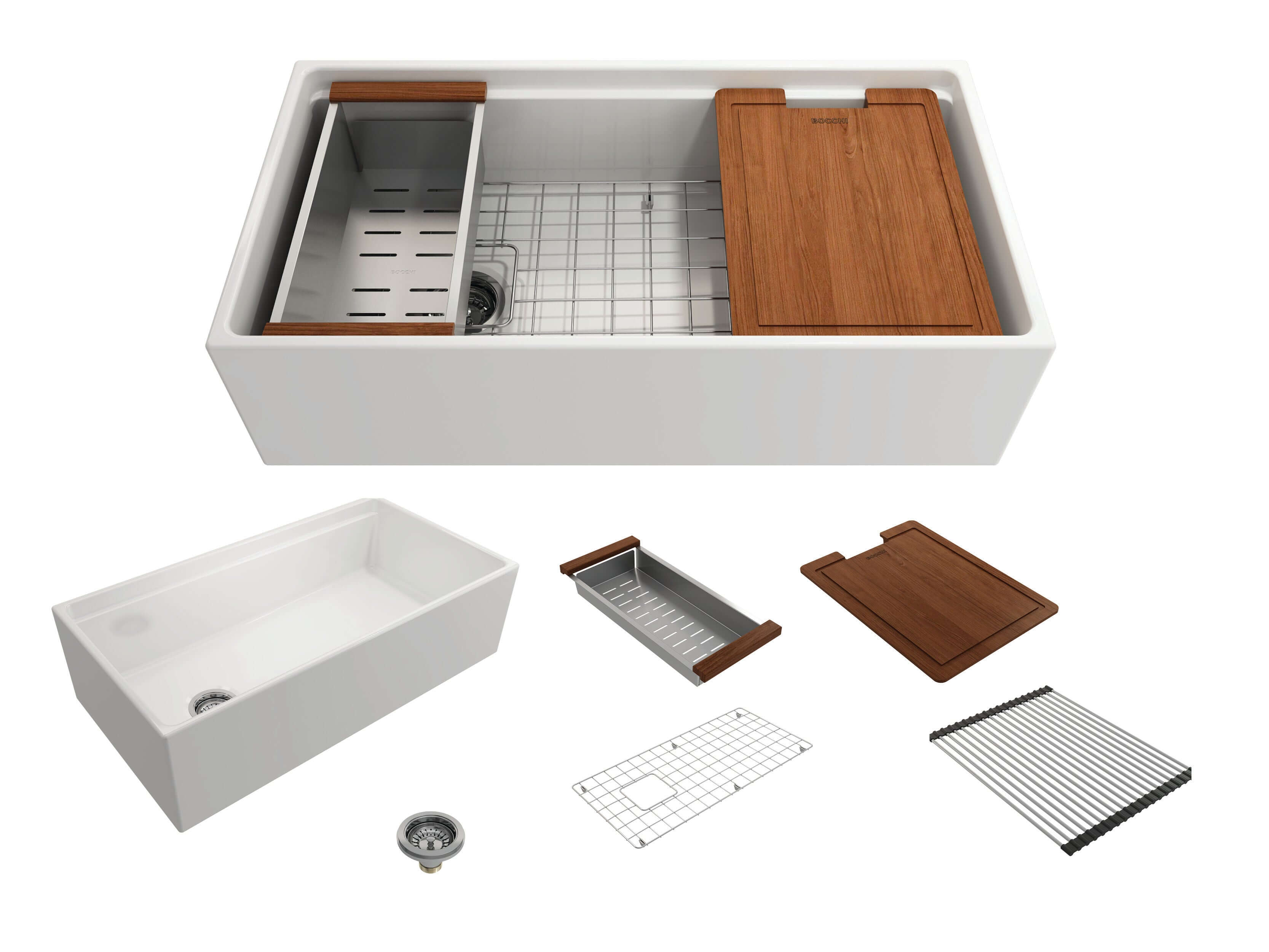
Fireclay sinks are made from refined clay that is shaped by hand and fired in a kiln at temperatures above 1,800 degrees Fahrenheit. That firing process fuses the clay and the glaze into a single, nonporous surface. The result is a sink that is dense, heavy, and extremely resistant to heat and staining.
The thickness that makes fireclay so durable also makes it naturally quiet. You will not hear the same hollow resonance in a fireclay sink that you get from thin-gauge metal. That density also means fireclay sinks are heavy, often between 100 and 160 pounds for a standard 33-inch farmhouse model. Cabinet support is not optional. Most 33-inch fireclay sinks require a reinforced 36-inch base cabinet to carry the load safely.
The BOCCHI fireclay farmhouse sinks are one of the most consistent performers in this category. It is currently priced very well and available in Matte White, Biscuit, and Slate Gray. It ships from in-stock inventory and includes a lifetime manufacturer's warranty.
What is stainless steel, and what grades matter?
Stainless steel sinks are formed from sheets of steel alloy and graded by thickness using a gauge system. Lower gauge numbers mean thicker steel. A 16-gauge sheet measures approximately 0.060 inches thick. An 18-gauge sheet measures approximately 0.048 inches thick. That difference is noticeable in flex, noise, and long-term durability.
For a kitchen sink that will see daily use, 16-gauge is the practical minimum. Sinks below 16-gauge are more prone to denting, flexing under heavy loads, and transmitting noise. Most premium stainless kitchen sinks also include factory-applied sound-deadening pads on the underside of the basin to absorb vibration from water and cookware.
Grade 304 stainless steel, which contains 18 percent chromium and 8 percent nickel, is the standard for quality kitchen sinks. It resists corrosion reliably in residential kitchen environments. Some manufacturers specify T-304 or 18/10 stainless to indicate the alloy composition. If a listing does not specify grade or gauge, treat that as a signal to look elsewhere.
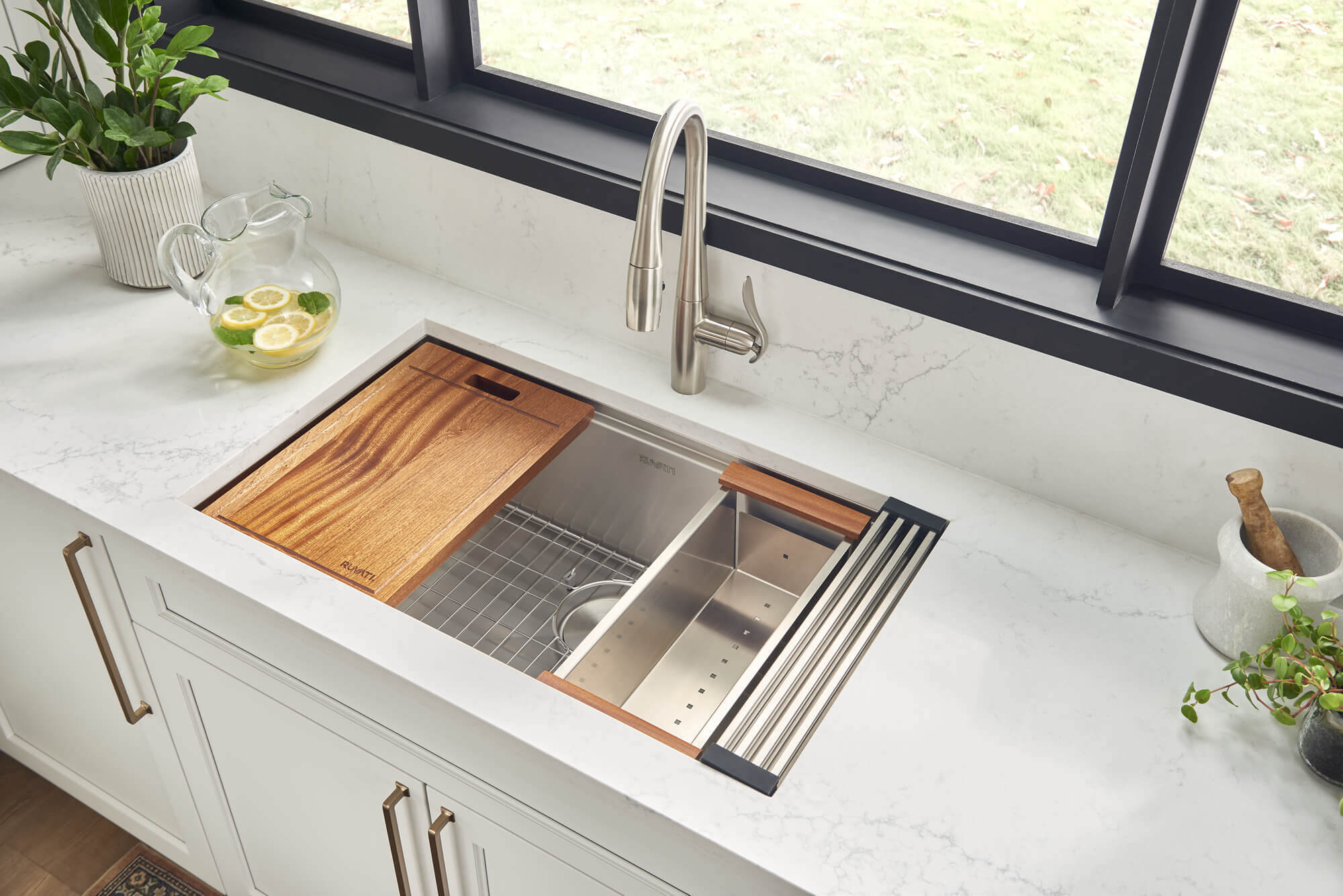
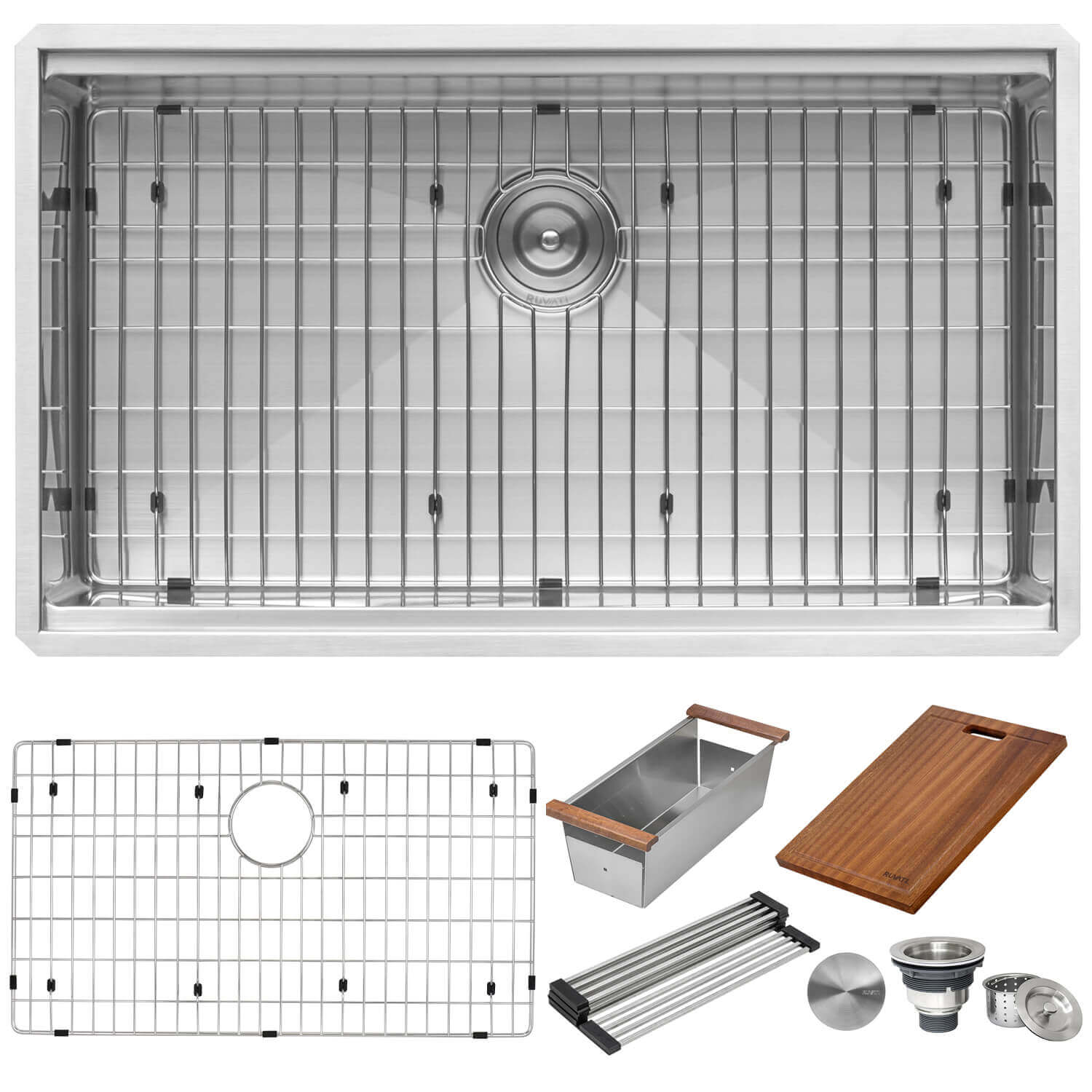
The Ruvati stainless steel kitchen sinks and Elkay stainless steel sinks are a strong option in this format. It is 16-gauge T-304 stainless with a brushed finish and is currently priced at $499. It fits most standard 36-inch farmhouse cabinet openings.
Durability comparison: chips, scratches, and dents
Fireclay and stainless steel fail in different ways, and understanding that difference helps you choose based on how your kitchen actually gets used.
Fireclay is one of the hardest materials used in kitchen sinks. The glazed surface resists scratches, stains, and heat from hot pots placed directly in the basin. Its vulnerability is impact. Dropping a heavy cast-iron skillet into a fireclay sink from a height can chip the glaze. That chip does not spread or rust, but it is permanent. Fireclay does not dent or flex, and it does not scratch from normal cookware contact.
Stainless steel is the opposite profile. It is highly impact-tolerant and will absorb a dropped pan without chipping. It does scratch, particularly from abrasive pads or steel wool. On brushed finishes, light scratches blend into the surface texture over time and become nearly invisible. Stainless steel does not chip, but thin-gauge sinks can dent permanently from a direct impact.
One pattern we see regularly across our customer base: buyers who have young children in the kitchen or who cook frequently with cast-iron tend to prefer stainless steel specifically because the impact tolerance removes a source of anxiety. Buyers remodeling a kitchen they plan to keep for 20 or more years tend to prefer fireclay because the surface holds its appearance over decades without visible wear from normal daily use.
Maintenance: What is actually easier day to day?
Both materials are low-maintenance compared to copper or stone sinks. The practical differences come down to what you are trying to avoid.
Fireclay's nonporous glaze resists staining from coffee, wine, and food residue. Mild dish soap and a soft cloth handle most cleaning. The glaze does not absorb bacteria or odors. The one routine maintenance step specific to fireclay is avoiding abrasive pads, which can dull the glaze surface over time.
Stainless steel is similarly easy to clean, but it does show water spots, fingerprints, and streaks more readily than fireclay, particularly on polished finishes. Wiping the basin dry after use prevents most spotting. Brushed finishes are significantly more forgiving than polished finishes at this point. A light application of mineral oil every few months restores the surface and reduces water spotting on stainless.
A note on hard water: if you have high mineral content in your water supply, both materials will show deposit buildup around the drain and faucet cutouts over time. White vinegar removes mineral deposits from both surfaces without damaging either material. This is the most common maintenance question we receive from customers in hard water regions.
Cost comparison at current prices
Fireclay sinks cost more than stainless steel at comparable sizes and formats. The gap is real, and understanding what drives it helps you decide whether the premium is worth paying for your specific kitchen.
Entry-level fireclay farmhouse sinks from authorized dealers typically start around $650 to $700 for a 30-inch single-basin model. Mid-range options in the 33-inch format, including the BOCCHI Contempo 33-inch at $858, represent the strongest value point in the fireclay category. Premium fireclay sinks with specialty finishes or custom sizing can reach $1,500 to $1,800 or more.
Quality stainless steel farmhouse sinks in 16-gauge start around $400 to $500 for standard undermount configurations. Apron-front stainless models begin around $600 to $700. The Ruvati stainless steel kitchen sinks, starting at at $210 is a strong representative of what 16-gauge stainless delivers at that price.
One cost factor buyers often overlook: fireclay sinks ship as freight due to their weight, which affects delivery logistics. Most fireclay orders from TSB include free freight shipping on qualifying orders. Confirm shipping method at checkout if this affects your project timeline.
Which sink material is right for your kitchen?
- Choose fireclay if you are renovating a farmhouse, traditional, or design-forward kitchen and want a sink that holds its appearance for decades without surface wear from daily use. It suits buyers who prioritize aesthetics and are comfortable with the cabinet reinforcement requirement.
- Choose stainless steel if you have a high-traffic kitchen, cook frequently with heavy cookware, or want a versatile sink that works across modern, transitional, and functional kitchen styles at a lower entry price.
- Choose fireclay if your designer has specified an apron-front or farmhouse profile as the visual anchor of the kitchen design. The glaze depth and color consistency of fireclay sinks have no equivalent in metal.
- Choose stainless steel if your timeline is tight or your budget requires flexibility. The price range is wider, lead times on in-stock models are typically shorter, and the installation is less dependent on cabinet modification.
If you are unsure which format fits your cabinet opening, our team can run a quick fit check before you order. Reach us at (844) 470-1212, Monday through Friday, 9 AM to 5 PM EST.
Our recommendation
If the kitchen design calls for an apron-front or farmhouse profile and will be lived in for ten or more years, fireclay is the better long-term choice. The surface holds up better over time than stainless, and the visual presence of a quality fireclay sink like the BOCCHI Contempo does not diminish the way a brushed metal finish eventually will. For buyers who cook hard, have young children, or are outfitting a rental or a home they do not plan to keep long-term, stainless steel is the smarter, more resilient, and lower-cost choice.
Both materials deliver excellent long-term value when matched to the right kitchen. The difference in price between a quality specialist retailer and a marketplace seller is rarely the deciding factor. What matters is buying from an authorized dealer who can support the warranty if anything goes wrong after installation.
Explore our full collections: fireclay kitchen sinks and stainless steel kitchen sinks. Questions before you order? Call us at (844) 470-1212.
The Sink Boutique: 4.88 stars across 1,548 reviews (confirm on publish day). Authorized dealer since 2018. Free shipping on qualifying orders. 30-day returns on unused, uninstalled items in original packaging. Full return policy here.