Natural stone kitchen sinks are prized for their authenticity, durability, and visual impact. Unlike composite or engineered materials, these sinks are carved from solid blocks of natural stone—making every piece truly one of a kind.
This guide compares the most popular natural stone materials used in kitchen sinks, helping homeowners, designers, and builders choose the right option for performance, maintenance, and aesthetics.
What Makes a Sink “Natural Stone”?
A natural stone kitchen sink is crafted from a single block of stone rather than molded or mixed with resins. This results in superior density, heat resistance, and a unique surface texture that cannot be replicated.
Common characteristics include:
-
Organic veining and color variation
-
Exceptional durability
-
High-end, architectural appeal
-
Long lifespan when properly installed and maintained
Popular Natural Stone Sink Materials Compared
Black Basalt
Black basalt is a dense volcanic stone known for its durability and matte appearance. It is nearly as hard as granite and naturally resistant to staining.
Best for: Modern kitchens, low-maintenance households
Maintenance: Minimal; sealing typically not required
Granite (Including Black Granite & Mercury Granite)
Granite is one of the hardest natural stones available, making it ideal for heavy-use kitchens. Its dense structure resists heat, scratches, and impact.
Best for: Busy kitchens, modern and transitional designs
Maintenance: Low; occasional sealing may be recommended
Marble (Carrara, Cantera Beige, Emperador Dark)
Marble offers unmatched elegance with soft veining and luminous color variation. While slightly more porous than granite, it is widely used in luxury kitchens.
Best for: Statement kitchens, traditional or European-inspired designs
Maintenance: Moderate; sealing recommended
Soapstone
Soapstone is naturally non-porous and resistant to stains and bacteria. It has a smooth, velvety feel and deep charcoal coloration that ages beautifully over time.
Best for: Rustic, farmhouse, or minimalist kitchens
Maintenance: Very low; optional oiling for darker appearance
Limestone & Travertine
These stones provide warm, earthy tones and subtle texture. Modern limestone varieties used for sinks are denser and more kitchen-appropriate than traditional limestone.
Best for: Old-world, Mediterranean, or organic design styles
Maintenance: Moderate; sealing recommended
Quartzite & Exotic Stone (Crystal Blue Quartzite, Petrified Wood)
These rare materials are chosen for their dramatic appearance and exclusivity. Quartzite is extremely hard, while petrified wood offers unmatched visual character.
Best for: High-end custom kitchens and luxury builds
Maintenance: Varies by material; sealing often recommended
Farmhouse vs. Undermount Stone Sinks
Most natural stone kitchen sinks are available in:
-
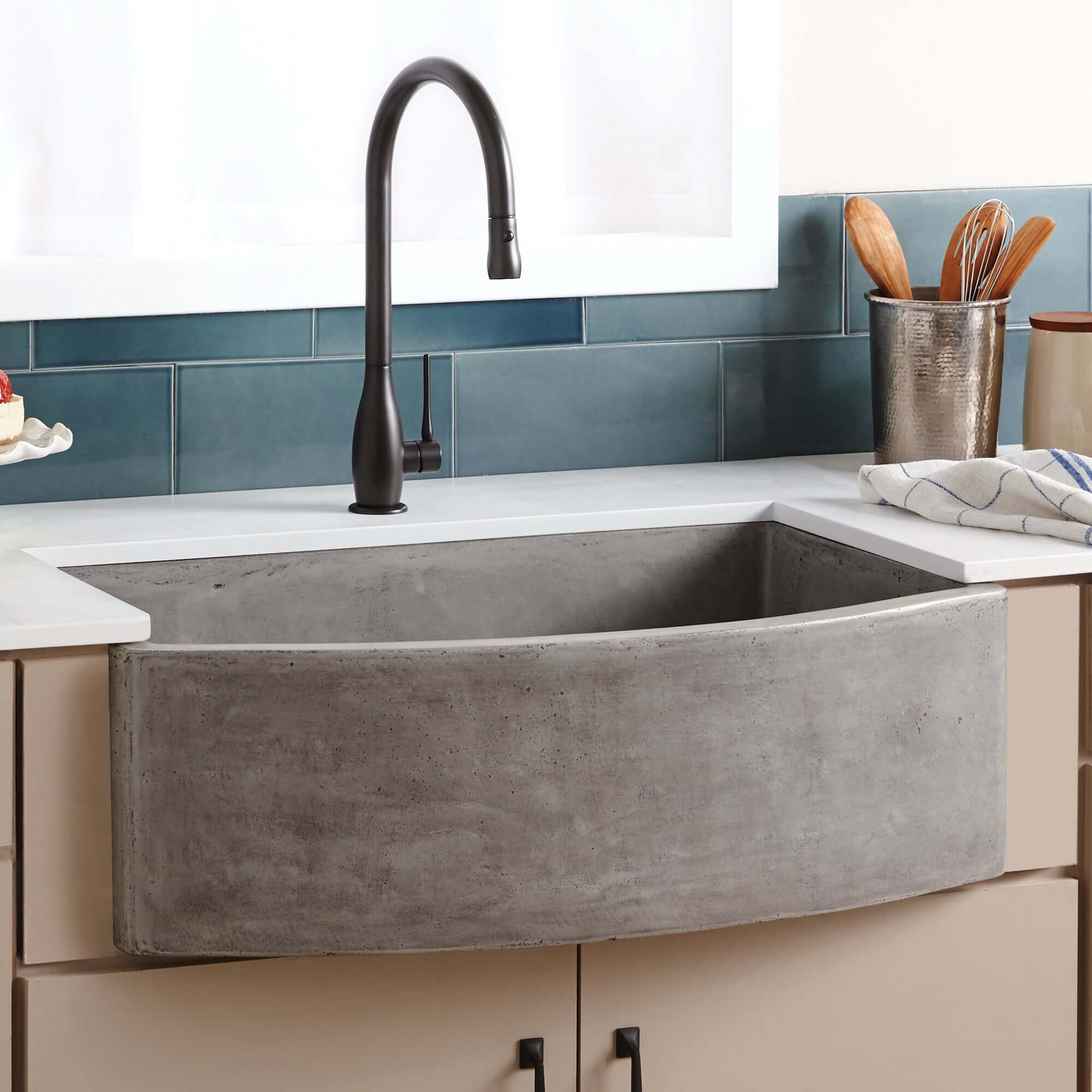
Farmhouse (apron-front) styles for bold architectural impact
-
Undermount styles for a clean, seamless countertop look
Installation choice depends on cabinet design, countertop material, and aesthetic preference.
Are Natural Stone Kitchen Sinks Durable?
Yes. When properly installed, natural stone sinks are highly durable and resistant to heat, daily wear, and heavy cookware. Because each sink is carved from solid stone, structural integrity is superior to molded alternatives.
Choosing the Right Stone Sink for Your Kitchen
When selecting a natural stone sink, consider:
-
Kitchen usage level
-
Desired maintenance requirements
-
Design style and color palette
-
Installation type (farmhouse vs undermount)
For homeowners seeking timeless luxury and authenticity, natural stone remains one of the most premium sink materials available.
Explore Natural Stone Kitchen Sinks
Browse our curated collection of handcrafted natural stone kitchen sinks, available in farmhouse and undermount styles, crafted from the world’s finest stone materials.