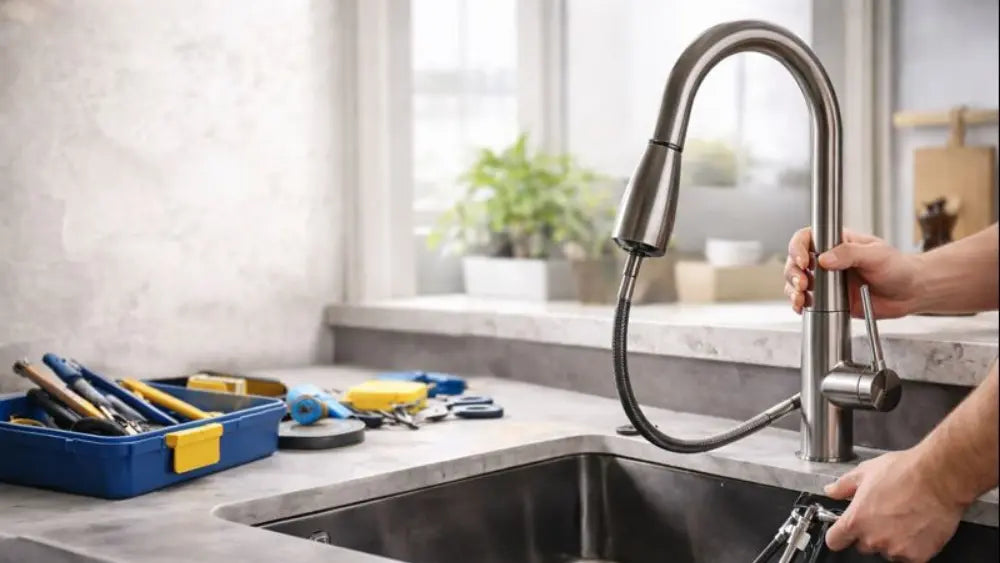
Installing a kitchen faucet may seem straightforward, but the details matter more than most homeowners expect. From matching the faucet to your sink hole configuration to routing pull-down hoses correctly, a proper kitchen faucet installation ensures smooth operation, leak-free performance, and long-term durability.
This 2026 update from The Sink Boutique walks you through installing a kitchen faucet step by step, with specific guidance on single-hole faucets, pull-down sprayers, and wall-mount kitchen faucets. We also cover common installation mistakes we see as sink and faucet specialists.
If you are installing a new kitchen faucet or replacing an old one, start here.

Proper kitchen faucet installation begins with matching the faucet type to your sink and countertop.
This guide covers: single-hole kitchen faucet installation, pull-down faucet hose setup, wall-mount faucet requirements, and DIY vs plumber considerations.
Types of Kitchen Faucet Installations
Understanding your faucet installation type is critical before you begin.
> Single-Hole Kitchen Faucet Installation
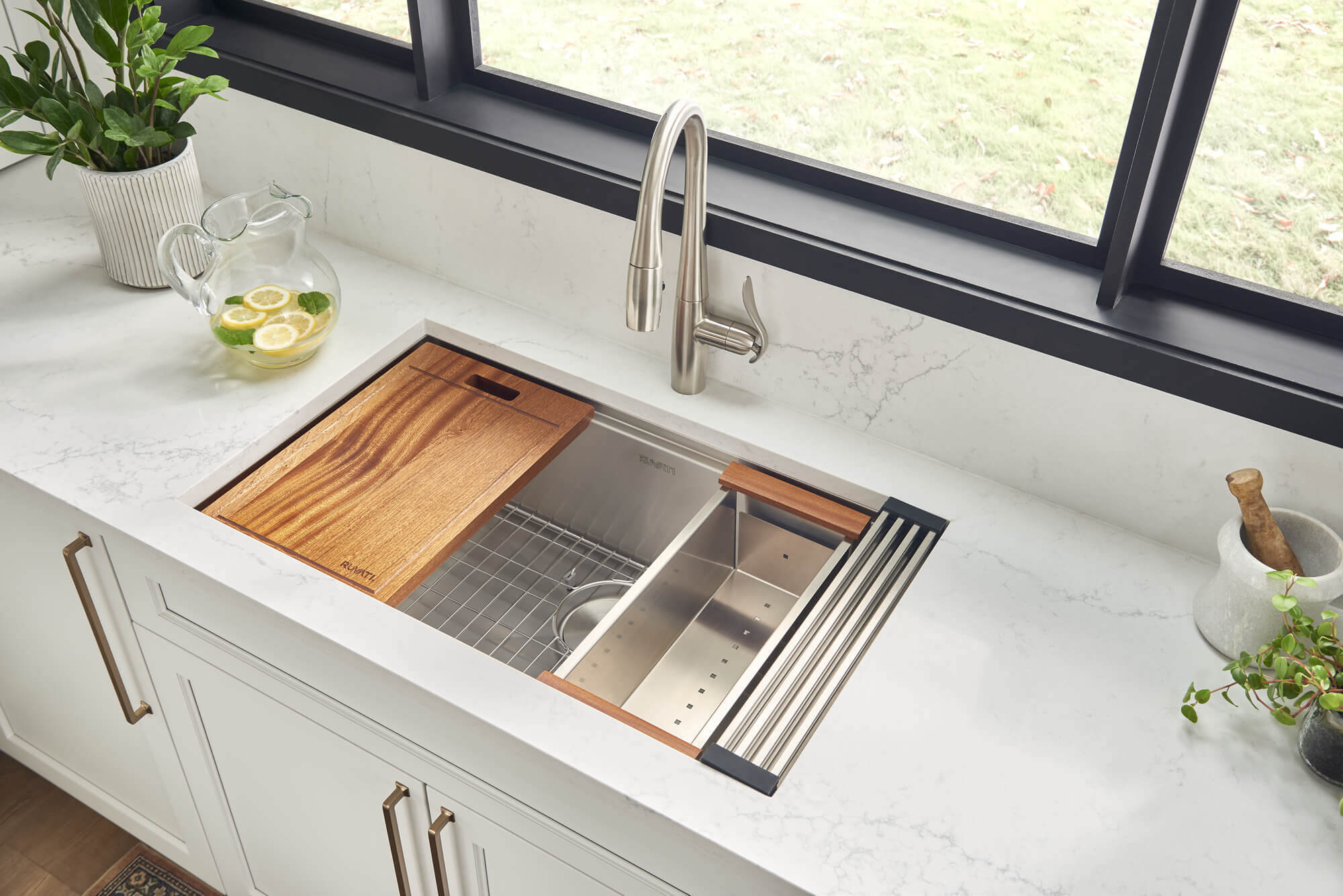
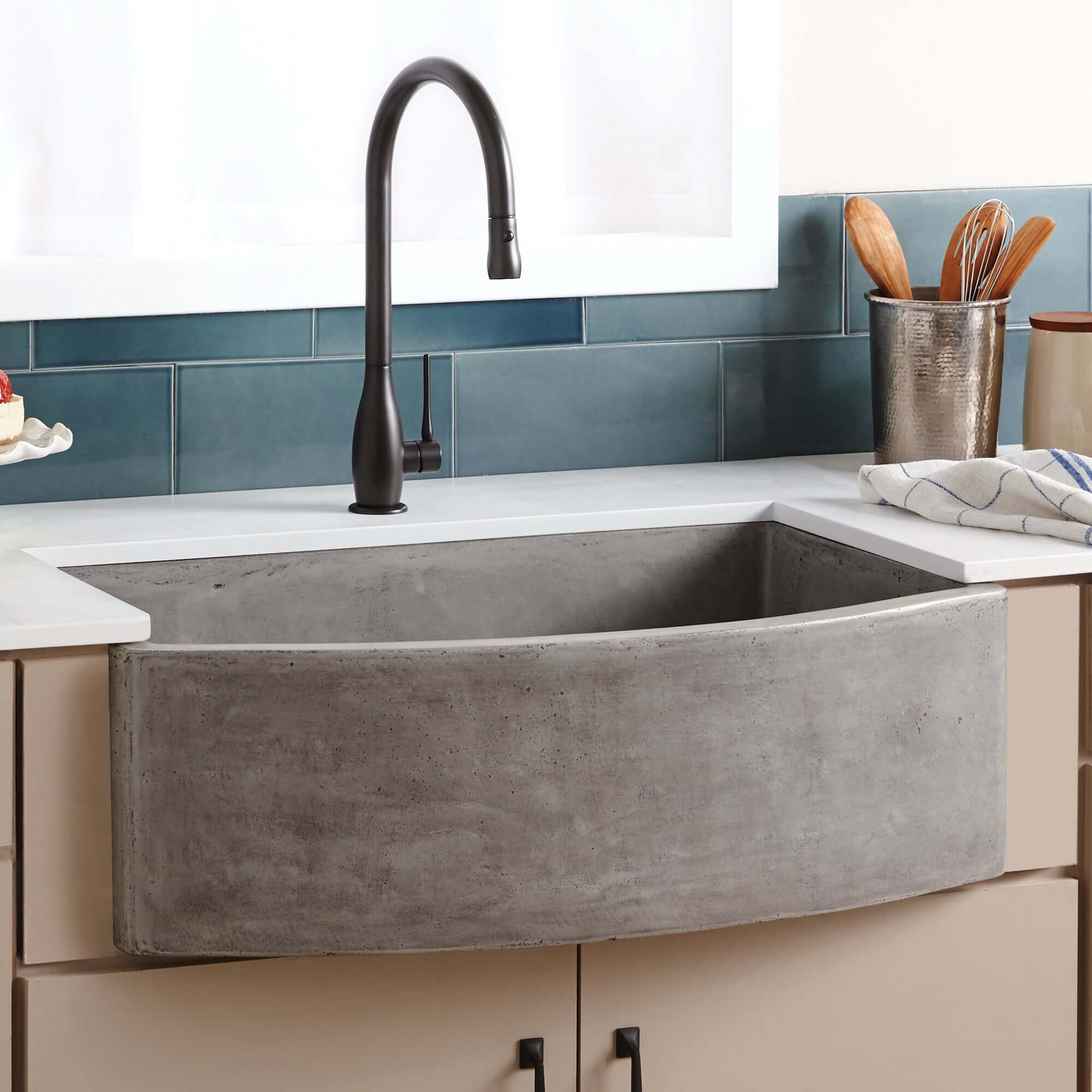
Single-hole faucets are the most common option in modern kitchens. They install through one opening and often include a deck plate to cover unused holes.
Browse single-hole kitchen faucets
> Three-Hole Kitchen Faucet Installation
Three-hole setups are common in traditional kitchens and support widespread faucets, bridge faucets, or side accessories.
> Wall-Mount Kitchen Faucet Installation
Wall-mount faucets install into the wall rather than the sink deck and require precise plumbing rough-ins.
What to Check Before Installing a Kitchen Faucet
- Sink hole count: Verify the number of mounting holes.
- Countertop thickness: Thick stone may require extended hardware.
- Rear clearance: Pull-down faucets need full spray-head movement.
- Faucet reach: Spout reach should align with sink bowl depth.
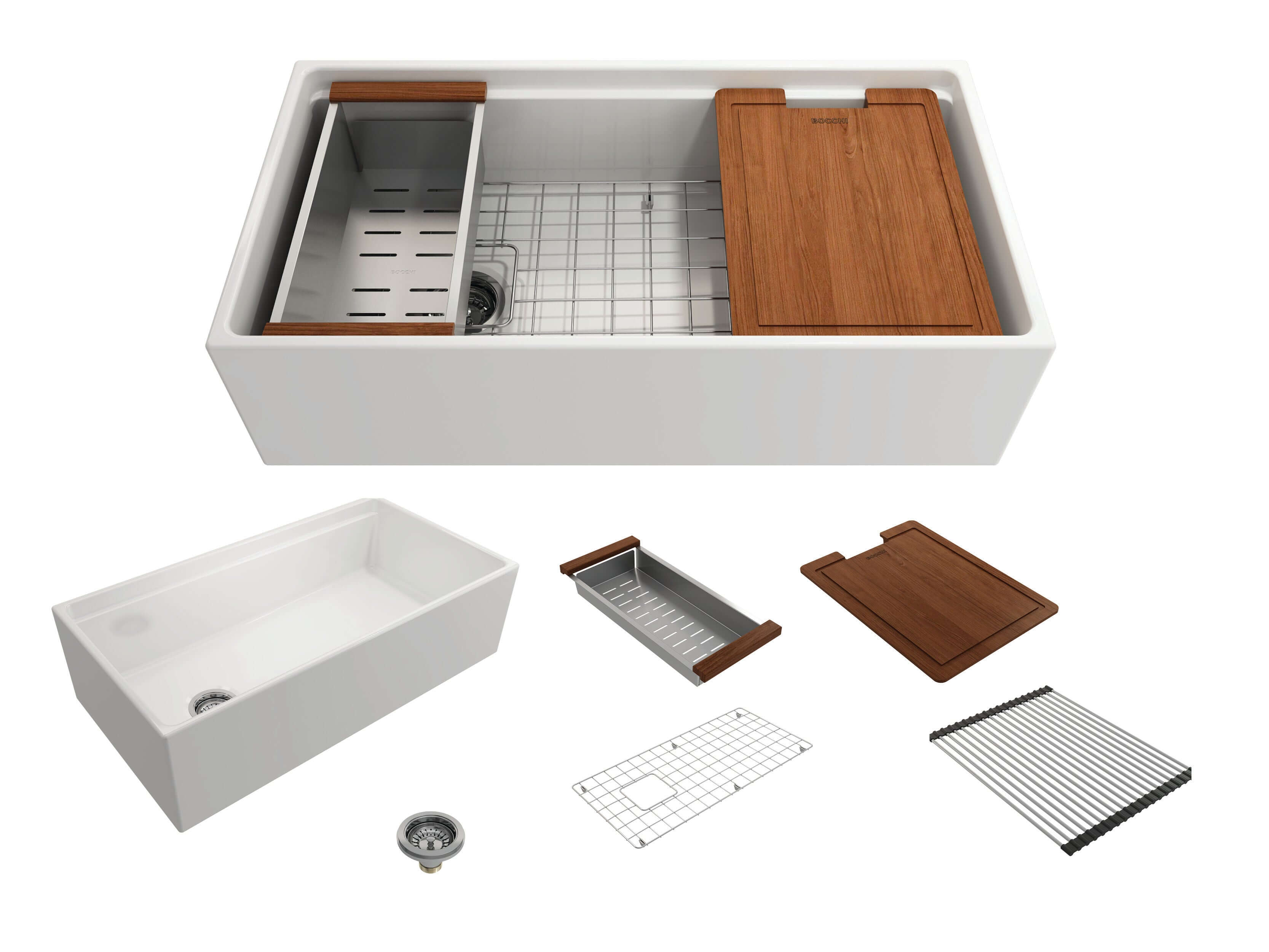
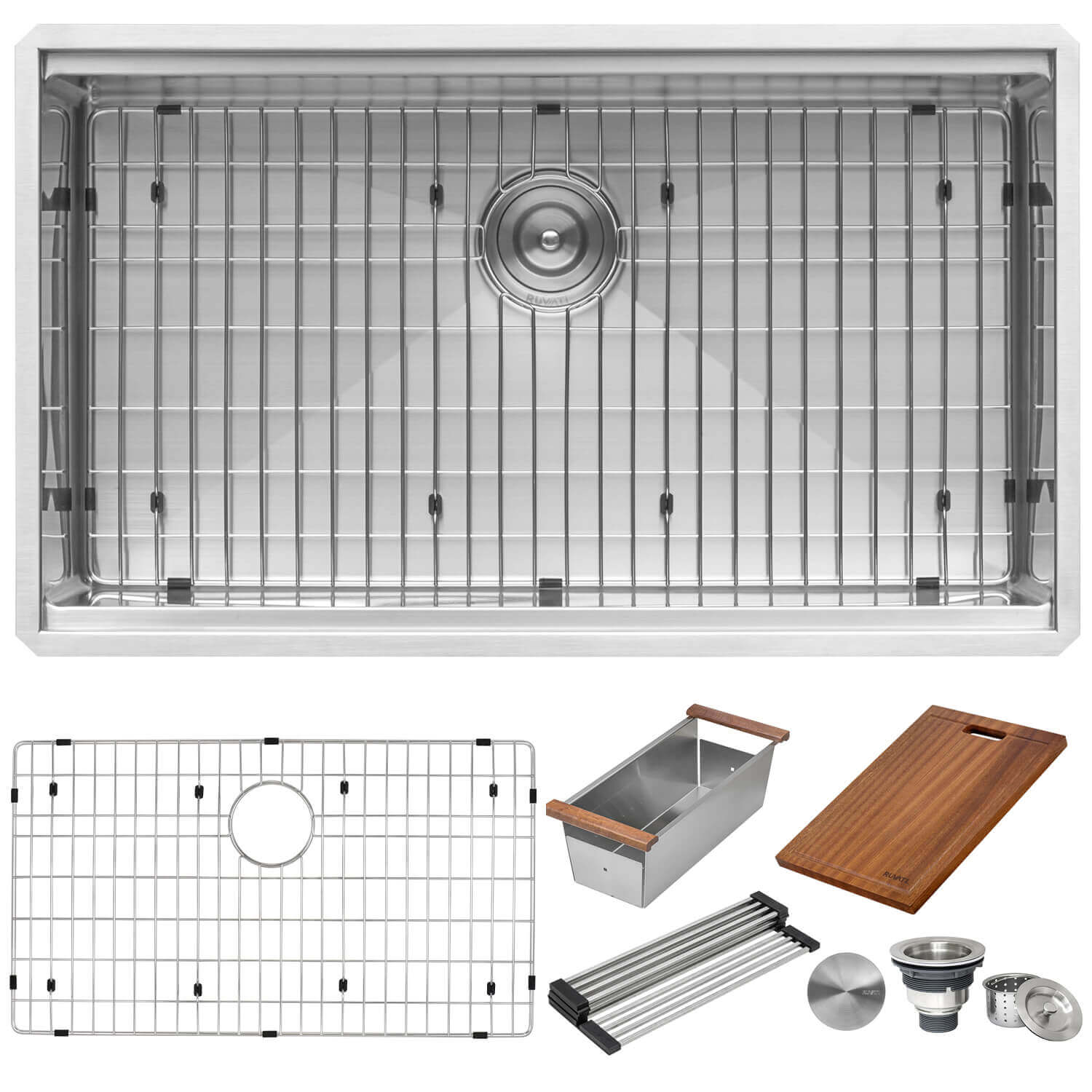
Pairing the correct faucet with your sink is essential. View our full kitchen sink collection.

A sink showing the number of holes available for faucet installation.
Tools Needed for Kitchen Faucet Installation
- Adjustable wrench or basin wrench
- Bucket or towel
- Plumber’s tape
- Silicone sealant (if required)
- Flashlight for under-sink visibility
Step-by-Step Kitchen Faucet Installation
- Confirm sink hole compatibility
- Identify faucet type (pull-down, bridge, wall-mount)
- Ensure shutoff valves work properly
- Check cabinet and backsplash clearance
- Identify quick-connect vs compression fittings
-
Shut Off Water and Remove the Old Faucet
Turn off both shutoff valves and open the faucet to relieve pressure. Disconnect supply lines and remove mounting hardware using a basin wrench if needed.
-
Prepare the Mounting Surface
Clean the sink deck thoroughly and remove old sealant. Dry-fit deck plates or escutcheons before final placement.
-
Install the New Faucet Body
Insert the faucet through the mounting hole and seat the gasket or sealant per manufacturer instructions. Align the faucet before tightening.
-
Secure the Mounting Hardware
Tighten mounting brackets evenly from below. Avoid overtightening, especially on stainless or thinner sink decks.
-
Connect Supply Lines and Sprayer Hose
Attach hot and cold supply lines. Install the pull-down hose and counterweight, ensuring free movement inside the cabinet.
-
Test for Leaks and Operation
Turn the water on slowly and inspect all connections. Test spray modes, handle movement, and hose retraction.
Installation Differences by Faucet Type
Pull-Down and Pull-Out Faucets
These require correct hose routing and counterweight placement for smooth retraction.
View pull-down kitchen faucets
Wall-Mount Faucets
Wall-mount faucets depend on precise plumbing rough-ins and are best installed during remodels.
Common Kitchen Faucet Installation Mistakes
- Mismatched sinkhole configuration
- Insufficient sprayer clearance
- Overtightened mounting hardware
- Ignoring countertop thickness
DIY vs Hiring a Plumber
Most deck-mounted faucets are DIY-friendly. Wall-mount faucets typically require a licensed plumber.
Choosing the Right Faucet for Your Sink
Select the sink first, then choose a faucet that complements bowl size, mounting type, and daily use.
Explore our kitchen faucet collection or read our kitchen sink buying guide.
Kitchen Faucet Installation FAQs
Can I install a kitchen faucet myself?
Yes, most deck-mounted faucets are DIY-friendly with basic tools.
Do all faucets fit all sinks?
No. Compatibility depends on hole count, spacing, and countertop thickness.
What is the easiest faucet to install?
Single-hole faucets with integrated supply lines are typically easiest.
Are wall-mount faucets hard to install?
Yes. They require precise plumbing rough-ins.
Do pull-down faucets need special clearance?
Yes. The hose and counterweight must move freely.
Should supply lines be replaced?
Yes, especially if existing lines are old or rigid.
Ready to upgrade your kitchen? Browse our premium selection of kitchen faucets curated to pair perfectly with modern and farmhouse sinks.